
How Wars Have Historically Affected the U.S. Stock Market. Discover how major conflicts have influenced stocks, investor behavior, and long-term market performance.
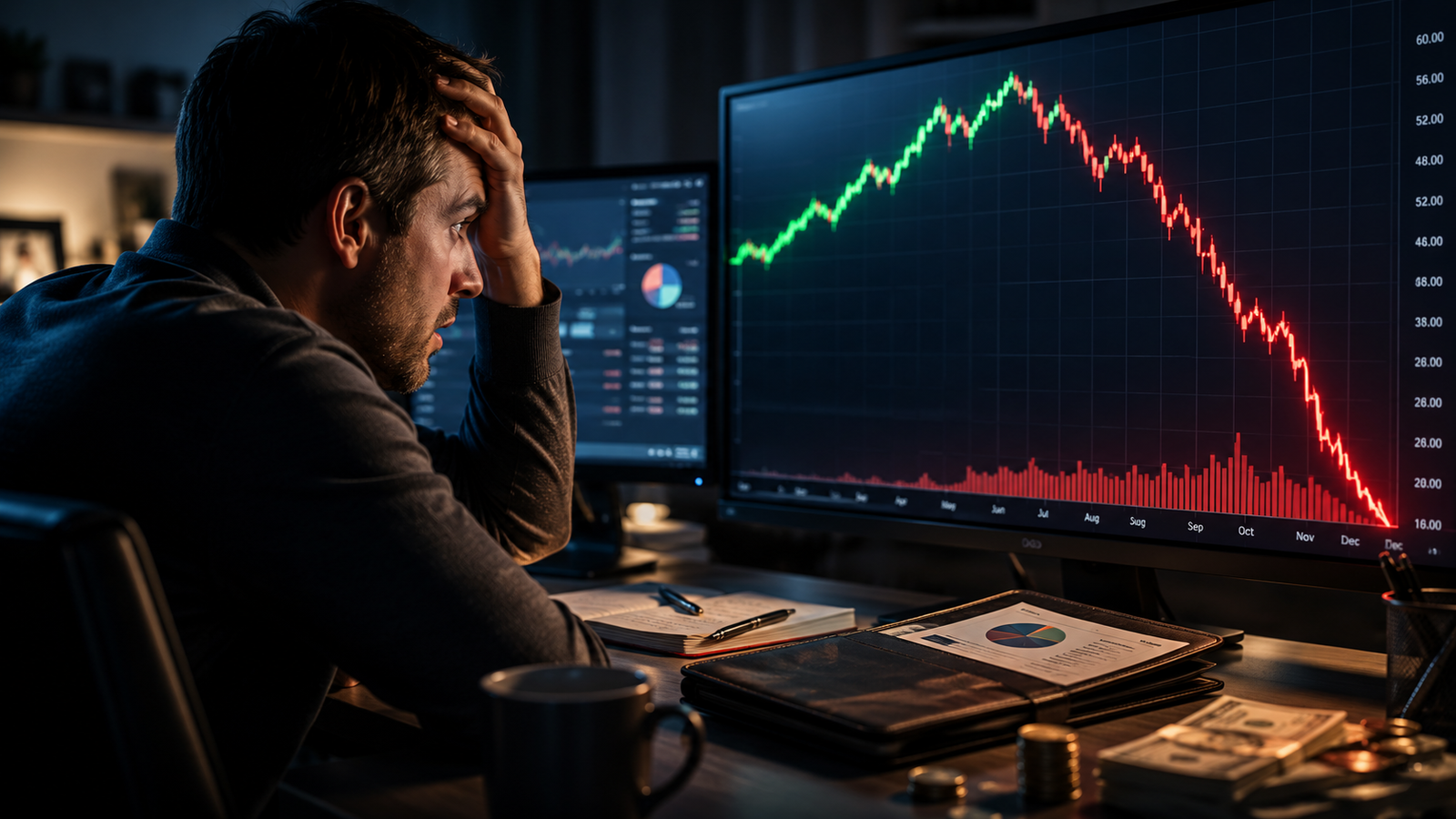
How Wars Have Historically Affected the U.S. Stock Market is a question that resurfaces whenever global tensions dominate the headlines. Military conflicts often create uncertainty, and uncertainty tends to make investors nervous. Consequently, stock markets may experience sharp swings as traders react to breaking news and changing expectations.
Although every conflict is unique, history offers valuable lessons. Wars have influenced inflation, government spending, interest rates, commodity prices, and corporate profits. However, they have not always produced the same outcome for financial markets. In some cases, stocks initially declined before recovering quickly. In others, economic disruptions lasted much longer and affected multiple sectors of the economy.
Because emotions frequently drive short-term market reactions, many investors assume that selling immediately is the safest choice. Nevertheless, historical evidence suggests that long-term investment results often depend more on discipline than on reacting to dramatic headlines. Understanding how markets responded during previous conflicts can help investors separate fear from facts.
Throughout this guide, you’ll explore how major wars have affected the U.S. stock market, why some industries benefited while others struggled, and what long-term investors can learn from history. More importantly, you’ll discover practical strategies for managing risk without abandoning a well-diversified investment plan.
Key Takeaways
- Wars often increase short-term market volatility.
- Investor sentiment usually changes faster than economic fundamentals.
- Different sectors respond differently during military conflicts.
- Energy, defense, and commodity-related industries may benefit in some scenarios.
- Diversification remains one of the best long-term risk management strategies.
- History shows that markets often recover after major geopolitical events.
- Emotional investing frequently leads to poor long-term decisions.
- Long-term planning is generally more effective than reacting to headlines.
Why Financial Markets React to Wars
Stock markets dislike uncertainty.
Whenever a major conflict begins, investors immediately reassess future economic conditions. As expectations change, stock prices often adjust before the real economic effects become visible.
Several factors influence these reactions:
- Political uncertainty
- Economic growth expectations
- Inflation concerns
- Energy prices
- Government spending
- Interest rate expectations
- Corporate earnings forecasts
Because these variables evolve rapidly, markets sometimes experience sharp price movements during the early stages of a conflict.
The Difference Between Short-Term Fear and Long-Term Performance
Breaking news often creates dramatic market reactions.
Nevertheless, short-term volatility doesn’t always determine long-term investment results.
History shows that many market declines associated with geopolitical events eventually stabilized as investors gained more clarity about economic conditions.
For that reason, experienced investors frequently distinguish between temporary market sentiment and lasting changes to business fundamentals.
Understanding this difference can prevent emotional investment decisions.
Lessons From History
Financial markets have experienced numerous military conflicts over the past century.
Among the most significant were:
- World War I
- World War II
- The Korean War
- The Vietnam War
- The Gulf War
- The Afghanistan War
- The Iraq War
Each conflict occurred under different economic circumstances.
Consequently, market performance varied considerably from one event to another.
Instead of searching for identical historical patterns, investors should focus on understanding the broader economic forces that influenced market behavior.
Why Some Industries Benefit During Wartime
Not every sector responds negatively during periods of conflict.
In fact, certain industries have historically experienced increased demand.
Examples include:
- Defense contractors
- Aerospace companies
- Energy producers
- Oilfield services
- Cybersecurity businesses
- Industrial manufacturers
Government spending often increases during military conflicts.
As a result, companies supplying equipment, technology, logistics, and energy may experience stronger business activity.
However, improved demand does not automatically guarantee superior investment returns.
Company fundamentals remain equally important.
Industries That May Face Additional Pressure
While some businesses benefit from wartime spending, others often encounter new challenges.
For example:
- Airlines may experience higher fuel costs.
- Tourism companies frequently see weaker demand.
- Consumer discretionary businesses may face slower spending.
- Import-dependent manufacturers could experience supply chain disruptions.
Therefore, investors should evaluate each sector individually instead of assuming all companies will react similarly.
Why Investor Psychology Matters
Financial markets are influenced by human behavior as much as economic data.
Fear often dominates during the first days of a major geopolitical crisis.
Meanwhile, uncertainty encourages investors to seek safer assets.
Because emotional reactions occur quickly, market prices sometimes overshoot both upward and downward.
Disciplined investors recognize that volatility is a normal part of investing.
Rather than making impulsive decisions, they evaluate whether changing conditions genuinely affect their long-term financial goals.
Preparing Instead of Predicting
Many investors spend significant time trying to predict exactly how markets will respond to geopolitical events.
Unfortunately, even professional analysts rarely forecast every market movement correctly.
A more practical approach focuses on preparation.
Diversification, regular portfolio reviews, disciplined investing, and appropriate risk management generally provide greater long-term value than attempting to predict every headline.
In the next section, we’ll examine how individual wars affected the U.S. stock market, which sectors historically performed best, and what today’s investors can realistically learn from those historical examples.
How World War I Influenced the U.S. Stock Market
World War I created one of the first major tests for modern financial markets.
When the conflict began in 1914, uncertainty spread rapidly across global exchanges. As a precaution, the New York Stock Exchange temporarily suspended trading for several months. This unprecedented decision reflected concerns about capital outflows and financial instability rather than the long-term health of American businesses.
After trading resumed, market conditions gradually improved.
Meanwhile, increased industrial production and rising demand for manufactured goods supported economic activity in the United States. Consequently, several industries experienced significant growth as the country became a major supplier of materials and equipment.
The key lesson is that markets often react strongly during the early stages of uncertainty before adapting to changing economic conditions.
World War II and the American Economy
World War II transformed the U.S. economy.
Government spending increased dramatically. At the same time, factories expanded production to support military operations. As a result, unemployment declined while industrial output reached record levels.
Defense companies, manufacturers, and transportation businesses experienced substantial growth.
Although investors initially faced uncertainty, many companies ultimately benefited from increased government contracts and expanding production capacity.
Nevertheless, not every business performed equally well.
Consumer goods, travel, and luxury industries faced unique challenges because resources shifted toward wartime priorities.
This period demonstrates how government spending can reshape corporate earnings across multiple sectors.
The Korean War
The Korean War occurred during a different economic environment.
Unlike World War II, the U.S. economy had already transitioned into a period of post-war growth.
However, rising military expenditures contributed to inflationary pressures.
Because inflation influences interest rates, investors became increasingly focused on monetary policy.
Even so, the broader economy remained resilient, and the stock market eventually recovered from early volatility.
The lesson here is that macroeconomic conditions often matter just as much as the conflict itself.
The Vietnam War
The Vietnam War created a more prolonged economic impact.
Military spending increased over many years, while inflation gradually accelerated.
Eventually, higher inflation combined with slower economic growth created difficult conditions for both consumers and investors.
Consequently, the stock market experienced periods of weakness.
At the same time, uncertainty surrounding fiscal policy and monetary decisions became increasingly important.
Rather than responding only to military developments, investors closely monitored inflation and interest rates.
The Gulf War
The Gulf War provides one of the clearest examples of how markets often recover after initial fear.
Before military operations began, oil prices rose sharply as investors worried about supply disruptions.
Stock markets initially declined because uncertainty dominated investor sentiment.
However, once military objectives became clearer and uncertainty began to fade, market confidence improved.
Within a relatively short period, many equity markets recovered.
This pattern highlights an important principle:
Markets often dislike uncertainty more than bad news itself.
The Iraq and Afghanistan Wars
The conflicts in Iraq and Afghanistan unfolded over many years.
During this period, investors faced numerous economic challenges beyond military operations.
These included:
- Rising energy prices
- Housing market developments
- Financial system instability
- Changes in monetary policy
- Global economic growth
Because multiple factors influenced financial markets simultaneously, isolating the impact of military conflicts became increasingly difficult.
Nevertheless, certain defense and aerospace companies continued receiving substantial government contracts.
Meanwhile, broader market performance remained heavily influenced by economic fundamentals.
Which Sectors Historically Performed Better?
Although every conflict differs, several industries have historically demonstrated relative strength during periods of geopolitical uncertainty.
| Sector | Historical Characteristics During Major Conflicts |
|---|---|
| Defense | Often benefits from increased government spending |
| Aerospace | Higher demand for military equipment |
| Energy | May benefit when oil prices rise |
| Industrial Manufacturing | Increased production in some periods |
| Cybersecurity | Growing importance during modern conflicts |
| Utilities | Sometimes viewed as defensive investments |
These historical observations should not be interpreted as guarantees.
Instead, they illustrate how different sectors may respond to changing economic conditions.
Sectors That Have Faced Greater Challenges
Other industries have historically encountered additional pressure.
Examples include:
Airlines
Higher fuel costs and reduced travel demand can affect profitability.
Tourism
Consumer uncertainty frequently reduces discretionary travel spending.
Consumer Discretionary
Inflation often leaves households with less disposable income.
Consequently, demand for non-essential goods may weaken.
Import-Dependent Businesses
Supply chain disruptions and higher transportation costs may reduce operating margins.
The Importance of Looking Beyond Headlines
Every major conflict generates thousands of news stories.
However, successful investors rarely build portfolios based solely on breaking headlines.
Instead, they evaluate:
- Corporate earnings
- Balance sheet strength
- Cash flow
- Competitive advantages
- Long-term industry trends
- Economic fundamentals
Because markets constantly process new information, disciplined investing often produces better long-term outcomes than emotional reactions.
History Offers Perspective — Not Predictions
Many investors search for historical patterns hoping to predict future market movements.
Although history provides valuable lessons, no two conflicts unfold under identical circumstances.
Today’s economy differs significantly from previous decades.
Global supply chains, technology, central bank policies, and financial markets have evolved considerably.
Therefore, historical examples should be viewed as educational tools rather than precise forecasting models.
In the next section, we’ll examine practical investment strategies, common mistakes to avoid during geopolitical crises, and actionable steps investors can take to strengthen their portfolios regardless of future market uncertainty.
Expert Insights: What Long-Term Investors Can Learn From History
One of the biggest mistakes investors make is assuming every war produces the same financial outcome.
History tells a different story.
Although military conflicts often create short-term uncertainty, the long-term performance of the U.S. stock market has depended on many additional factors, including economic growth, inflation, corporate earnings, monetary policy, and investor confidence.
Therefore, wars should be viewed as one piece of a much larger economic puzzle.
Instead of asking, “Will this conflict crash the market?” experienced investors usually ask a different question:
“How does this event change long-term business fundamentals?”
That shift in thinking often leads to more rational investment decisions.
Common Investing Mistakes During Geopolitical Crises
Periods of uncertainty frequently encourage emotional behavior.
Fortunately, understanding these common mistakes can help investors avoid unnecessary losses.
Mistake 1: Selling During Panic
Sharp market declines naturally create fear.
However, history shows that many investors who sold during periods of panic later struggled to re-enter the market.
As a result, they often missed important recoveries.
Mistake 2: Concentrating Too Much in One Sector
Defense or energy stocks sometimes outperform during geopolitical tensions.
Nevertheless, investing exclusively in one industry increases portfolio risk.
Diversification remains a more balanced long-term strategy.
Mistake 3: Ignoring Company Fundamentals
Some investors buy stocks simply because they belong to a popular sector.
Instead, evaluate each business carefully by reviewing:
- Revenue growth
- Profit margins
- Cash flow
- Debt levels
- Dividend sustainability
- Competitive advantages
Strong companies generally navigate uncertainty more effectively than weaker competitors.
Mistake 4: Assuming History Will Repeat Exactly
Every conflict develops under different political and economic circumstances.
Consequently, historical market behavior should provide context rather than certainty.
Using history as a guide is useful.
Treating it as a prediction is not.
Action Plan for Investors
If geopolitical tensions increase market volatility, consider following this practical framework.
Step 1: Review Your Investment Goals
Begin by asking yourself why you invested in the first place.
If your objectives remain unchanged, temporary market volatility may not require major portfolio adjustments.
Step 2: Maintain Diversification
A diversified portfolio may include:
- Broad-market ETFs
- Dividend-paying stocks
- REITs
- Bonds
- Cash reserves
- Selected sector investments
This approach helps reduce dependence on any single market outcome.
Step 3: Avoid Emotional Decisions
Headlines often exaggerate short-term uncertainty.
Instead of reacting immediately, review the underlying economic data before making investment decisions.
Patience frequently becomes one of an investor’s greatest advantages.
Step 4: Focus on High-Quality Businesses
Companies with strong balance sheets, reliable cash flow, and experienced management teams often prove more resilient during uncertain economic periods.
Quality should remain a priority regardless of current events.
Step 5: Continue Building Long-Term Wealth
Successful investing rarely depends on predicting every geopolitical event.
Instead, consistent investing, disciplined saving, and continuous learning typically contribute more to long-term financial success.
Frequently Asked Questions
Do wars always cause stock market crashes?
No.
Although markets often become more volatile during military conflicts, historical outcomes have varied considerably depending on economic conditions and investor expectations.
Which sectors usually benefit during wartime?
Historically, defense, aerospace, energy, industrial manufacturing, and cybersecurity companies have sometimes benefited from increased government spending or higher commodity prices.
However, individual company performance can differ significantly.
Is it smart to sell stocks when war begins?
There is no universal answer.
Investment decisions should reflect personal financial goals, diversification, and long-term strategy rather than emotional reactions to headlines.
Why do oil prices often rise during conflicts?
Military tensions may create concerns about future energy supplies or transportation routes.
Consequently, commodity markets sometimes respond by increasing oil prices.
Has the U.S. stock market recovered after previous wars?
In many historical cases, the market eventually recovered.
However, recovery periods varied depending on inflation, economic growth, interest rates, and broader financial conditions.
Should beginners change their investment strategy during geopolitical crises?
Most beginner investors benefit from maintaining diversified portfolios and focusing on long-term objectives instead of attempting to predict short-term market movements.
What is the biggest lesson from history?
History demonstrates that disciplined investing, diversification, and patience have generally produced stronger long-term results than emotional decision-making.
Final Thoughts
How Wars Have Historically Affected the U.S. Stock Market reminds investors that uncertainty has always been part of financial markets.
Wars, geopolitical tensions, and international crises can certainly create short-term volatility.
Nevertheless, history also shows that markets are remarkably resilient over long periods.
Rather than reacting impulsively to every headline, successful investors typically evaluate broader economic trends, corporate fundamentals, and their own financial goals.
Although no strategy eliminates investment risk, diversification, disciplined investing, and a long-term perspective remain among the most reliable principles for navigating uncertain environments.
Ultimately, investors who stay focused on education, patience, and thoughtful decision-making often place themselves in a stronger position than those driven primarily by fear.
Internal Linking Opportunities
Strengthen your website’s SEO by linking this article to related content using anchor texts such as:
- How the Iran Conflict Could Send Oil Prices Soaring—and Which Stocks May Benefit
- Best Dividend Stocks for Long-Term Investors
- Investing During Market Volatility
- Building a Diversified Investment Portfolio
- How Inflation Affects Your Investments
- REIT Investing Guide
- Dollar-Cost Averaging Explained
- Warren Buffett’s Long-Term Investment Strategy
- Passive Income Strategies
- How Compound Interest Builds Wealth
External Authority Sources
Readers who want to explore these topics further should consult trusted organizations such as:
- U.S. Securities and Exchange Commission (SEC): https://www.sec.gov
- Federal Reserve: https://www.federalreserve.gov
- U.S. Department of Defense: https://www.defense.gov
- Congressional Budget Office (CBO): https://www.cbo.gov
- Morningstar: https://www.morningstar.com
Final Call to Action
Markets will continue to experience geopolitical uncertainty.
Instead of trying to predict every crisis, concentrate on building a diversified portfolio, investing consistently, and strengthening your financial knowledge.
History suggests that disciplined investors are often better positioned to navigate uncertainty than those who make decisions based solely on fear.
Stay informed.
Stay diversified.
Most importantly, keep your long-term financial goals at the center of every investment decision.