
Why Smart Investors Ignore Breaking News (And Often Earn More)
Discover why smart investors ignore breaking news, avoid emotional decisions, and focus on long-term strategies that have historically built lasting wealth.
The financial world never seems to slow down.
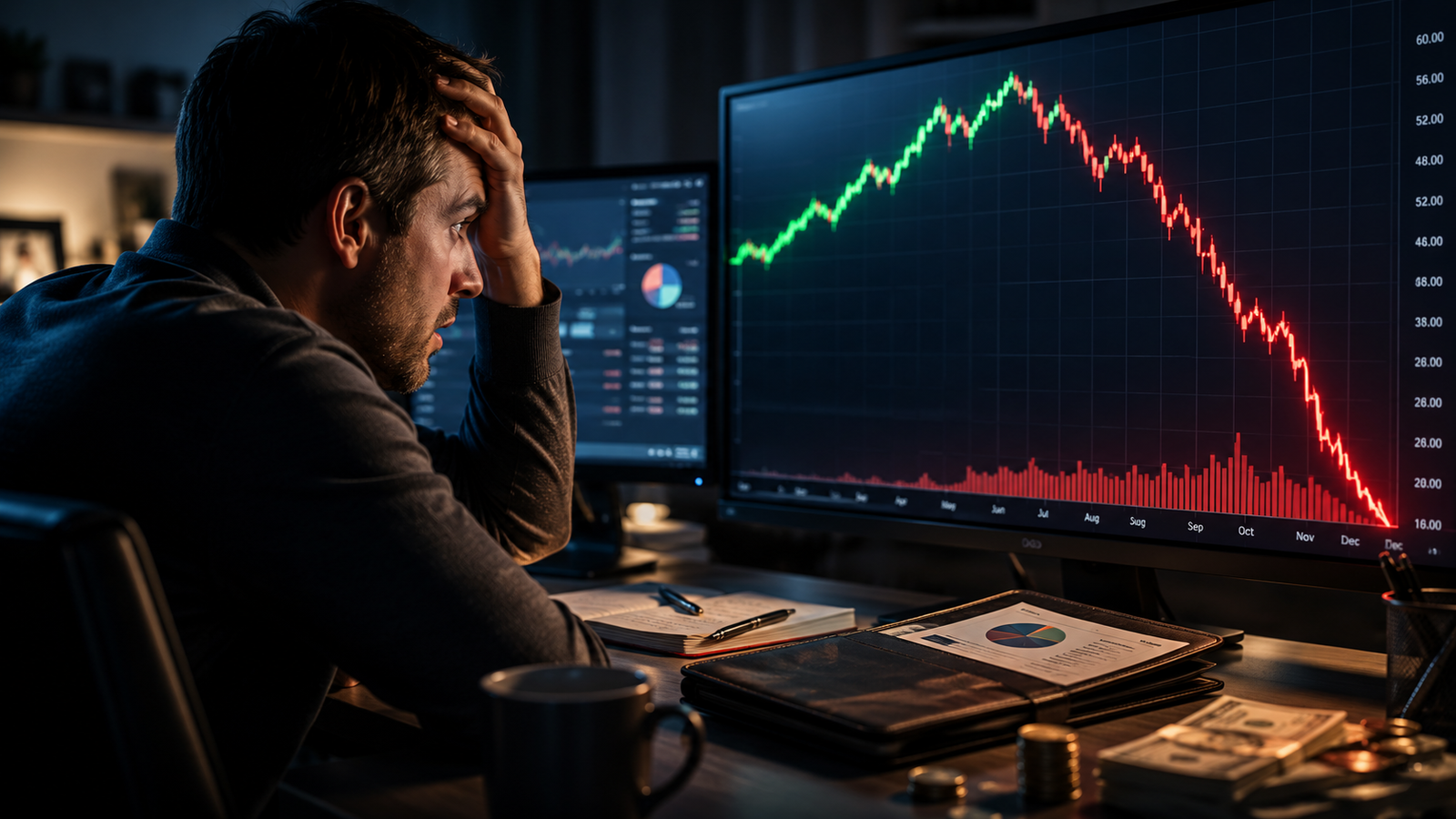
Every day brings another “urgent” headline. One hour, investors are told inflation will crush the stock market. A few hours later, optimism returns after a positive economic report. By the end of the day, another breaking story claims that a single event could reshape the future of investing.
For many beginners, this constant stream of news feels impossible to ignore. As a result, countless investors refresh financial websites, watch business television for hours, and react to every market update as if their financial future depends on it.
However, Why Smart Investors Ignore Breaking News is a question worth asking because history tells a different story.
Many of the world’s most successful long-term investors spend surprisingly little time reacting to daily headlines. Instead, they concentrate on business fundamentals, portfolio diversification, disciplined investing, and long-term economic trends. They understand that sensational news often creates short-term market volatility without changing the long-term value of high-quality investments.
This doesn’t mean informed investors ignore important economic developments. Rather, they separate meaningful information from market noise. That distinction allows them to remain calm while others become emotional.
Throughout this guide, you’ll learn why experienced investors rarely chase breaking news, how behavioral finance explains this advantage, and what practical habits you can adopt to make more rational investment decisions over the long run.
Key Takeaways
✔ Most breaking financial news has little impact on long-term investment returns.
✔ Emotional reactions often reduce investment performance.
✔ Smart investors focus on business fundamentals instead of daily headlines.
✔ Market volatility creates opportunities for disciplined investors.
✔ Long-term wealth is usually built through patience rather than prediction.
✔ Behavioral finance explains why humans naturally overreact to short-term events.
✔ A structured investment plan helps eliminate emotional decision-making.
Why Breaking News Feels So Important
Financial news is designed to capture attention.
Television networks compete for viewers.
News websites compete for clicks.
Social media platforms compete for engagement.
Consequently, headlines are often written to create urgency rather than perspective.
Consider how frequently investors encounter phrases such as:
- “Markets Plunge!”
- “Stocks Soar After Surprise Report!”
- “Experts Warn of a Historic Crash!”
- “This One Event Could Change Everything!”
Although these headlines generate curiosity, they rarely provide enough context for sound investment decisions.
Most market movements result from thousands of factors interacting simultaneously. Interest rates, corporate earnings, consumer spending, inflation, geopolitical developments, investor sentiment, and technological innovation all influence prices to varying degrees.
Therefore, reducing an entire market movement to one dramatic headline can create a misleading impression.
Experienced investors recognize that today’s breaking news is often forgotten within weeks.
Meanwhile, high-quality businesses continue developing products, serving customers, generating profits, and investing for future growth.
That difference in perspective is one reason disciplined investors remain focused while others become distracted.
The Human Brain Was Never Designed for Financial Markets
One of the biggest challenges in investing has nothing to do with mathematics.
Instead, it begins with human psychology.
Thousands of years ago, reacting quickly to danger increased the chances of survival. Our ancestors benefited from paying immediate attention to unexpected events because ignoring genuine threats could have serious consequences.
Modern financial markets activate the same survival instincts.
When investors see headlines announcing sharp market declines, the brain often interprets them as immediate threats. Consequently, fear begins influencing decision-making long before logic has an opportunity to evaluate the situation.
Behavioral economists have identified several cognitive biases that contribute to this pattern.
Among the most common are:
Loss Aversion
People generally experience the pain of losing money more intensely than the satisfaction of earning the same amount.
Because of this bias, a temporary portfolio decline often feels far more significant than it actually is.
Recency Bias
Recent events naturally receive greater attention than older information.
As a result, investors may assume today’s headline is more important than years of historical market data.
Availability Bias
Information that is repeated frequently becomes easier to remember.
Consequently, heavily reported news stories often appear more important than they truly are, even when their long-term impact is limited.
Understanding these psychological tendencies helps explain why successful investors rely on disciplined strategies instead of emotional reactions.
News Moves Prices— But Not Always Value
One of the most important distinctions every investor should understand is the difference between price and value.
Price reflects what the market is willing to pay for an asset today.
Value represents what that asset is actually worth based on its long-term ability to generate earnings, cash flow, and economic value.
Breaking news frequently changes prices.
It does not always change value.
Imagine a well-managed company with strong profitability, low debt, loyal customers, and growing revenue.
Now suppose negative headlines trigger a broad market sell-off.
Its share price may decline significantly over several days.
Even so, the underlying business could remain fundamentally unchanged.
Factories continue operating.
Employees continue working.
Customers continue buying products.
Management continues executing its long-term strategy.
Smart investors recognize this difference.
Rather than asking, “Why did the stock fall today?”, they ask a more important question:
“Has the long-term investment thesis actually changed?”
Very often, the answer is no.
That mindset allows experienced investors to view volatility as part of the investing process instead of evidence that their strategy has failed.
How the 24-Hour News Cycle Encourages Poor Investment Decisions
Financial news has changed dramatically over the past few decades.
Years ago, investors received market updates through newspapers, evening television broadcasts, or periodic reports from their brokers. Today, information travels instantly. Smartphones vibrate with breaking alerts, social media delivers endless opinions, and financial television broadcasts market commentary around the clock.
While this constant access appears helpful, it often creates the illusion that investors must react immediately.
In reality, most breaking stories have a surprisingly short lifespan.
A headline that dominates today’s financial conversation may be completely forgotten next week. Meanwhile, businesses continue hiring employees, launching products, improving operations, and generating revenue regardless of the daily news cycle.
Successful investors recognize this difference. Instead of treating every headline as a call to action, they ask whether the new information genuinely changes the long-term outlook for the companies they own.
More often than not, the answer is no.
That simple habit prevents countless unnecessary trades.
Why Smart Investors Think in Years Instead of Hours
One of the clearest differences between experienced investors and beginners is their perception of time.
Many new investors evaluate success based on today’s market performance.
Professional wealth builders evaluate success over years—or even decades.
That shift in perspective changes almost every investment decision.
For example, imagine buying shares in a company because you believe its products, leadership, and competitive advantages will drive growth over the next fifteen years.
A disappointing inflation report released tomorrow is unlikely to change that long-term thesis.
Nevertheless, many investors panic because the market reacts immediately.
Experienced investors understand that short-term volatility is simply part of owning productive assets.
Rather than asking,
“What happened today?”
they ask,
“Will this business likely be stronger ten years from now?”
That single question filters out much of the noise that dominates financial media.
The Hidden Cost of Emotional Trading
Every emotional investment decision carries a price.
Some costs are obvious.
Investors may pay commissions, taxes, or bid-ask spreads when buying and selling frequently.
However, the largest costs are often invisible.
Selling after prices have already fallen locks in losses.
Buying after a strong rally frequently means paying higher prices.
Repeatedly switching strategies interrupts the compounding process that long-term investors rely on.
Even worse, emotional trading creates stress.
Instead of feeling confident about their financial future, investors become trapped in an endless cycle of hope, fear, excitement, and regret.
Over many years, those emotions can become more damaging than market volatility itself.
What History Teaches About Market Headlines
History provides countless examples of markets recovering from events that once seemed catastrophic.
Economic recessions.
Banking crises.
Political uncertainty.
Wars.
Inflation spikes.
Global pandemics.
Each of these events generated dramatic headlines predicting lasting damage to financial markets.
Yet, diversified markets have repeatedly demonstrated remarkable resilience over long investment horizons.
This does not mean every company survives difficult periods.
Rather, it illustrates that broad markets have historically adapted, recovered, and continued growing despite extraordinary challenges.
Because of this historical pattern, experienced investors avoid making permanent decisions based on temporary headlines.
Instead, they recognize that uncertainty has always been part of investing.
Information Is Valuable — Noise Is Expensive
Ignoring breaking news does not mean ignoring information.
In fact, successful investors spend considerable time learning.
The difference lies in the type of information they consume.
Rather than chasing every headline, they focus on knowledge with lasting value.
Examples include:
- Understanding financial statements.
- Learning how businesses generate cash flow.
- Studying asset allocation.
- Improving tax efficiency.
- Reading annual reports.
- Evaluating competitive advantages.
- Understanding valuation principles.
These subjects remain useful for decades.
By contrast, today’s market headline may have little relevance a month from now.
Consequently, smart investors devote more energy to timeless investing principles than to daily speculation.
When Breaking News Actually Matters
Although many headlines deserve little attention, some events genuinely influence long-term investment decisions.
The challenge is learning to distinguish between temporary noise and meaningful change.
Breaking news deserves closer attention when it fundamentally alters an investment’s long-term outlook.
Examples include:
Permanent Changes to a Business
A company losing its primary competitive advantage, experiencing structural financial problems, or facing major regulatory changes may require investors to reassess their investment thesis.
Significant Economic Policy Changes
Major tax reforms, long-term monetary policy shifts, or lasting regulatory changes can influence entire industries over many years.
Changes to Personal Financial Goals
Sometimes the most important news has nothing to do with financial markets.
Marriage, retirement, career changes, or unexpected expenses may justify adjusting an investment strategy.
Notice the pattern.
These decisions are driven by long-term fundamentals—not emotional reactions to market headlines.
The Opportunity Cost of Watching Financial News All Day
Time is one of your most valuable financial assets.
Every hour spent refreshing market headlines is an hour not spent improving factors you can actually control.
Successful investors often focus on activities with a higher long-term return, such as:
- Increasing their earning potential.
- Building additional income streams.
- Improving professional skills.
- Expanding financial knowledge.
- Creating a diversified investment plan.
- Increasing annual savings.
Unlike daily market movements, these activities can directly improve long-term financial outcomes.
That is why many self-made millionaires spend surprisingly little time predicting markets and significantly more time improving themselves.
A Better Daily Investment Routine
Instead of beginning every morning with breaking financial news, consider replacing that habit with a routine designed to improve long-term decision-making.
For example:
Morning
Review your financial goals instead of checking stock prices.
Weekly
Read one high-quality investing article or a chapter from a respected finance book.
Monthly
Review your portfolio allocation and contribution progress.
Quarterly
Evaluate whether your investments still align with your long-term objectives.
Annually
Rebalance your portfolio if necessary and update your financial goals.
This structured approach reduces emotional decision-making while keeping your attention on what truly matters.
After all, successful investing isn’t about reacting faster than everyone else.
It’s about making consistently better decisions over a lifetime.
Part 2
What Smart Investors Focus on Instead of Breaking News
Once investors stop reacting to every headline, an important question naturally follows:
What should they focus on instead?
Experienced investors don’t ignore information—they prioritize information with lasting value.
Instead of chasing market predictions, they concentrate on factors that have historically influenced long-term investment success.
These include:
- Business fundamentals
- Earnings growth
- Free cash flow
- Competitive advantages
- Valuation
- Asset allocation
- Risk management
- Savings rate
- Investment discipline
Unlike daily headlines, these factors often remain relevant for years.
Consequently, they provide a much stronger foundation for making investment decisions.
Great Businesses Don’t Change Overnight
Financial headlines can make it seem as though companies change dramatically every day.
Reality is very different.
A high-quality business usually builds its success over decades through steady execution.
Consider what drives long-term value:
- Developing innovative products.
- Expanding into new markets.
- Increasing profitability.
- Managing debt responsibly.
- Building customer loyalty.
- Investing in research and development.
None of these achievements happen because of one afternoon’s news report.
Instead, they result from years of consistent management decisions.
This explains why patient investors spend more time evaluating businesses than interpreting headlines.
The Difference Between Noise and Signal
One of the most valuable investing skills is learning to distinguish meaningful information from temporary noise.
The following table illustrates the difference.
| Temporary Noise | Long-Term Signal |
|---|---|
| Daily stock price movements | Multi-year earnings growth |
| Television market predictions | Sustainable competitive advantages |
| Social media speculation | Strong balance sheet |
| Breaking political headlines | Consistent free cash flow |
| One-day market rallies | Long-term return on capital |
| Analyst opinions | Business execution over many years |
Smart investors train themselves to spend more time studying the right-hand column.
That simple habit dramatically reduces emotional decision-making.
Behavioral Finance Explains Why Headlines Feel So Powerful
Behavioral finance combines economics with psychology to explain why investors frequently make irrational decisions.
Several cognitive biases become especially dangerous during periods of intense news coverage.
Confirmation Bias
People naturally search for information supporting opinions they already hold.
For example, an investor who believes the market will crash may notice only negative headlines while ignoring positive economic data.
As a result, investment decisions become increasingly emotional.
Herd Mentality
Humans evolved as social creatures.
Following the crowd once improved survival.
Financial markets, however, often reward independent thinking.
When panic spreads through financial media, many investors sell simply because everyone else appears to be doing the same.
Disciplined investors recognize this tendency and evaluate facts before reacting.
Overconfidence Bias
Continuous news consumption can create the illusion that more information automatically leads to better investing.
Unfortunately, research suggests otherwise.
Having access to constant information does not guarantee better decisions.
In many cases, it simply increases unnecessary trading.
Case Study: Two Investors During Market Volatility
Imagine two investors, Sarah and Michael.
Both own identical diversified portfolios.
A major geopolitical event suddenly dominates financial headlines.
Markets decline sharply over several days.
Sarah’s Response
Sarah watches financial television throughout the day.
She receives dozens of market alerts.
Social media amplifies fears of a prolonged downturn.
Eventually, she sells a large portion of her portfolio because she believes further losses are inevitable.
Several months later, markets recover.
Sarah buys back her investments—but only after prices have already risen substantially.
Michael’s Response
Michael reads the news but follows his written investment plan.
Before making any decisions, he asks:
- Has my investment thesis changed?
- Are the companies fundamentally weaker?
- Have my long-term financial goals changed?
The answer to all three questions is no.
Instead of selling, Michael continues making his scheduled monthly investments.
When markets eventually recover, his portfolio benefits from both lower purchase prices and long-term compounding.
The difference between Sarah and Michael was not intelligence.
It was discipline.
Why Diversification Reduces the Need to React
Diversification remains one of the most effective tools for managing investment risk.
A diversified portfolio spreads investments across different:
- Industries
- Asset classes
- Company sizes
- Geographic regions
- Investment styles
Because of this diversification, negative news affecting one sector rarely determines the performance of the entire portfolio.
This allows investors to remain calm even when individual companies experience temporary challenges.
Rather than depending on a single investment, diversified investors benefit from the long-term growth of many productive assets.
What Legendary Investors Teach About News
Many of history’s most successful investors have emphasized patience over prediction.
Although their strategies differ, several common themes consistently emerge.
They Ignore Short-Term Market Noise
Successful investors understand that markets fluctuate daily.
Instead of reacting emotionally, they remain focused on long-term objectives.
They Read More Than They Watch
Rather than spending hours watching financial television, experienced investors often dedicate time to reading annual reports, shareholder letters, economic history, and business analysis.
This deeper understanding leads to better decision-making.
They Follow Written Investment Rules
A written investment strategy helps eliminate emotional reactions during periods of uncertainty.
Instead of making decisions based on fear or excitement, disciplined investors rely on predetermined principles.
Comparison: Reactive Investors vs. Smart Investors
| Reactive Investors | Smart Investors |
|---|---|
| Trade after breaking news | Follow long-term investment plans |
| Check portfolios several times each day | Review portfolios on a regular schedule |
| Focus on daily market movements | Focus on business fundamentals |
| Attempt to predict short-term prices | Accept short-term uncertainty |
| Frequently change strategies | Remain consistent over decades |
| Chase market trends | Build diversified portfolios |
| React emotionally | Make evidence-based decisions |
Notice that none of these differences require exceptional intelligence.
Most depend entirely on behavior.
Fortunately, disciplined behavior can be learned.
Five Practical Habits of Smart Investors
If you want to reduce the influence of breaking news on your investment decisions, begin with these habits.
1. Create a Written Investment Policy
Define your goals, time horizon, target asset allocation, and rebalancing schedule.
Written rules reduce emotional decision-making.
2. Schedule Portfolio Reviews
Instead of checking investments multiple times each day, review them monthly or quarterly.
This encourages long-term thinking.
3. Limit Financial News Consumption
Choose one or two trusted sources.
Avoid constantly refreshing market headlines throughout the day.
4. Continue Investing Automatically
Regular contributions help remove emotion from investing.
Dollar-cost averaging allows investors to keep building wealth regardless of short-term market conditions.
5. Study Businesses Instead of Headlines
Spend more time understanding how companies create value than trying to predict tomorrow’s market movement.
Knowledge compounds just like investments.
Action Plan: Replace News Consumption With Better Investing Habits
Follow this five-step plan over the next month.
Step 1
Turn off unnecessary market notifications on your phone.
Step 2
Limit financial news to one scheduled session each day.
Step 3
Write down your long-term investment objectives.
Step 4
Automate your monthly investment contributions.
Step 5
Review your progress after thirty days and evaluate whether your investment decisions feel calmer and more disciplined.
Small behavioral improvements, repeated consistently, often produce extraordinary financial results over time.
Expert Insights
One of the biggest misconceptions in investing is that successful investors know something the rest of the market doesn’t.
In reality, their advantage is often much simpler.
Experienced investors understand that reacting less can sometimes produce better long-term results.
Financial markets generate an enormous amount of information every day. However, only a small percentage of that information materially changes the long-term value of a diversified investment portfolio.
Professional investors don’t ignore important developments. Instead, they filter information through a disciplined framework.
Before making any investment decision, ask yourself:
- Has this news permanently changed the company’s ability to generate future earnings?
- Does this event alter my long-term investment thesis?
- Am I reacting to facts or emotions?
- Would I make the same decision if this headline didn’t exist?
Those questions create a valuable pause between information and action.
Over time, that pause can become one of the most profitable habits an investor develops.
Common Mistakes Investors Make
Breaking news becomes dangerous when it changes behavior instead of improving understanding.
Below are several mistakes that frequently reduce long-term investment performance.
1. Trading Based on Headlines
Many investors assume every major news story requires immediate action.
In reality, most headlines create temporary price movements rather than permanent changes in business value.
2. Confusing Volatility With Risk
Price fluctuations are normal.
Permanent capital loss usually results from poor investment decisions, excessive leverage, or owning weak businesses—not from temporary market volatility alone.
3. Watching Financial Television All Day
Financial news networks must produce content every hour.
Consequently, normal market movements are often presented as urgent events.
While this keeps audiences engaged, it can encourage unnecessary trading.
4. Ignoring Diversification
Investors who concentrate too heavily in one company or sector naturally become more sensitive to every headline.
A diversified portfolio reduces this emotional pressure.
5. Abandoning a Proven Plan
One emotional decision can undo years of disciplined investing.
The best investment plan is usually the one you can continue following during periods of uncertainty.
Realistic Expectations
Ignoring breaking news does not mean ignoring reality.
Instead, it means recognizing that long-term investing requires patience.
Even disciplined investors will experience:
- Market corrections
- Bear markets
- Economic recessions
- Geopolitical uncertainty
- Rising interest rates
- Unexpected volatility
These events are not signs that investing has failed.
Rather, they are normal characteristics of financial markets.
Historically, investors who remained diversified and continued investing through difficult periods have often been rewarded over long time horizons.
Although history offers valuable perspective, it never guarantees future results.
Your Five-Step Action Plan
If you want to become a calmer and more disciplined investor, start with these practical steps.
Step 1: Reduce News Consumption
Choose one reliable financial news source instead of monitoring dozens of websites and social media accounts.
Quality matters more than quantity.
Step 2: Define Your Investment Thesis
Before buying any investment, clearly write down why you own it.
When breaking news appears, compare the headline to your original thesis instead of reacting emotionally.
Step 3: Create Rules Before Markets Become Emotional
Decide in advance:
- When you will rebalance.
- When you will invest additional money.
- Under what circumstances you would sell.
Having written rules reduces emotional decision-making.
Step 4: Review Progress Quarterly
Checking your portfolio every hour rarely improves results.
Quarterly reviews often provide enough information while encouraging long-term thinking.
Step 5: Continue Learning
Investing is a lifelong skill.
Instead of trying to predict tomorrow’s headlines, focus on understanding:
- Business fundamentals.
- Valuation.
- Diversification.
- Asset allocation.
- Behavioral finance.
Knowledge compounds just as investments do.
Frequently Asked Questions (FAQ)
Should investors completely ignore financial news?
No.
Smart investors stay informed about meaningful developments but avoid reacting emotionally to every breaking headline.
How often should I review my portfolio?
For most long-term investors, reviewing a portfolio monthly or quarterly is sufficient.
However, your schedule should reflect your financial goals and investment strategy.
Why do markets react so strongly to breaking news?
Financial markets constantly process new information.
Short-term price movements often reflect changing expectations rather than permanent changes in business value.
Does ignoring headlines mean buying and holding forever?
Not necessarily.
Investments should be reviewed periodically.
However, decisions should be based on changing fundamentals—not temporary news cycles.
What type of information deserves attention?
Long-term investors should pay close attention to:
- Corporate earnings.
- Cash flow.
- Competitive advantages.
- Debt levels.
- Valuation.
- Economic trends with lasting effects.
Can behavioral finance improve investment results?
Yes.
Understanding common psychological biases helps investors avoid emotional decisions that frequently reduce long-term returns.
Is reacting quickly always a mistake?
No.
Occasionally, significant events genuinely change an investment’s long-term outlook.
The key is distinguishing between lasting fundamental changes and temporary market noise.
Final Thoughts
Financial markets will always produce another urgent headline.
Tomorrow’s breaking story will eventually replace today’s.
Next week’s headlines will replace tomorrow’s.
The cycle never ends.
Fortunately, building wealth does not require reacting to every piece of news.
Instead, successful investing depends on discipline, patience, diversification, and a commitment to long-term thinking.
Smart investors understand that markets reward ownership more consistently than prediction.
They spend less time chasing headlines and more time building strong portfolios, increasing savings, improving financial knowledge, and allowing compound growth to work over decades.
If there is one lesson to remember from this article, let it be this:
Breaking news changes every day. Great investing principles rarely do.
The investors who learn to separate information from noise place themselves in a far stronger position to achieve long-term financial success.
Internal Linking Opportunities
Strengthen your financial knowledge with these related guides:
- Why Most Millionaires Never Check Their Portfolio Every Day
- The $10 Financial Habit That Quietly Creates Millionaires
- How Compound Interest Builds Wealth Over Time
- Dividend Stocks vs. Index Funds: Which Builds More Wealth?
- Financial Independence Score Calculator
- Passive Income Score Calculator
- Wealth Acceleration Calculator
- How to Build a Dividend Portfolio That Pays You Every Month
- The Psychology of Successful Investors
- Why Consistency Beats Timing the Market
Trusted External Resources
For additional education, explore these respected financial resources:
- U.S. Securities and Exchange Commission (SEC) – Investor Education
https://www.investor.gov/ - Federal Reserve – Economic Research and Data
https://www.federalreserve.gov/ - Morningstar – Investing Education
https://www.morningstar.com/ - Charles Schwab – Investing Insights
https://www.schwab.com/learn - Vanguard – Investor Education
https://investor.vanguard.com/
Educational Disclaimer
This article is provided for educational and informational purposes only. It should not be considered financial, investment, legal, or tax advice.
Every investment involves risk, including the potential loss of principal. Past performance does not guarantee future results, and no investment strategy can eliminate market risk.
Before making financial decisions, evaluate your individual objectives, time horizon, and risk tolerance. When appropriate, consult a qualified financial advisor who can provide guidance tailored to your personal circumstances.