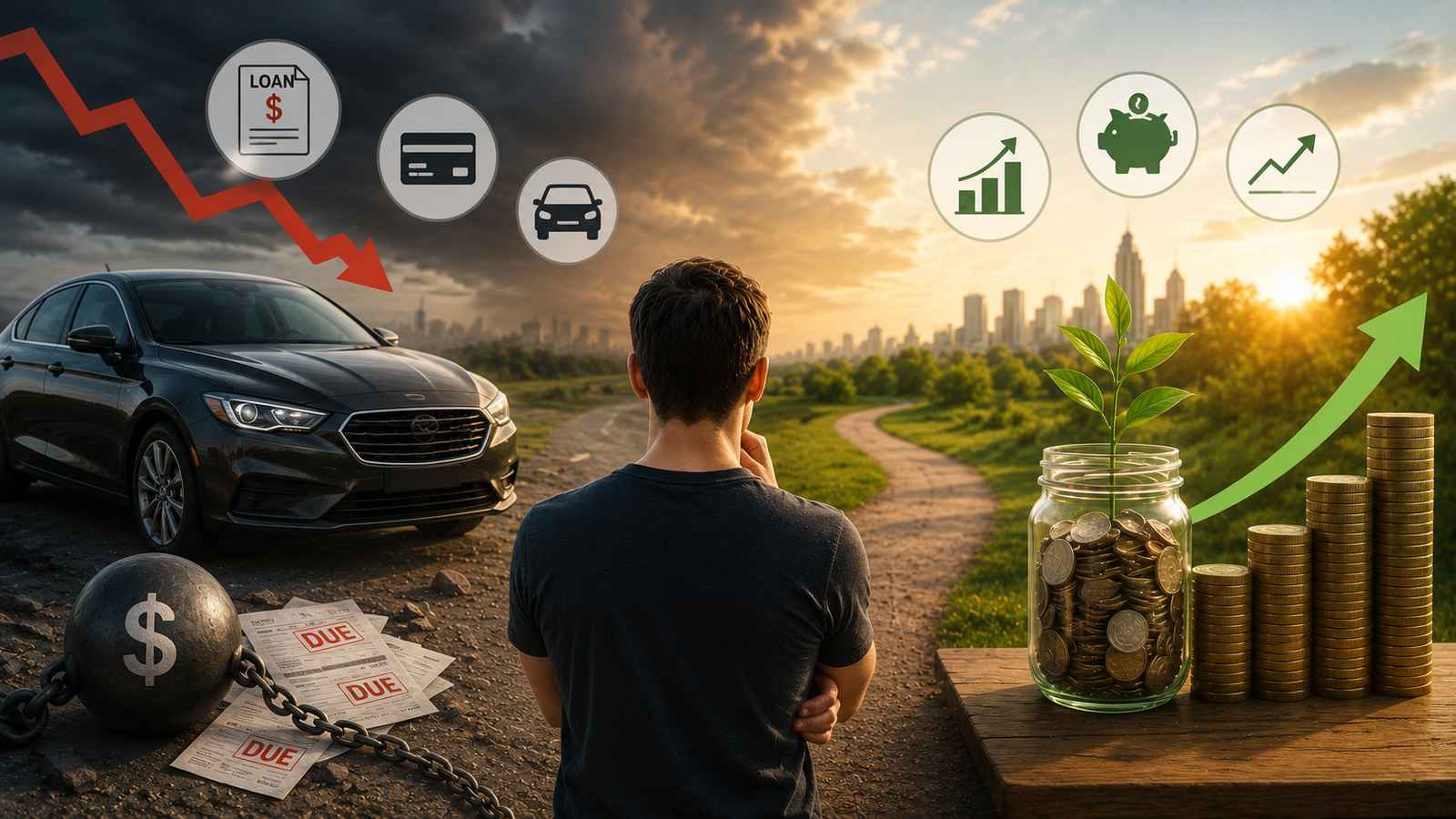

Financing a car on a $2,000 monthly income can strain your budget and delay financial freedom. Learn the real costs and smarter alternatives.
Buying a car is one of the biggest financial decisions most people make.
For many, it isn’t optional.
A reliable vehicle makes it easier to commute to work, access better job opportunities, take children to school, and handle everyday responsibilities.
In many cities and rural areas, owning a car isn’t about luxury.
It’s about necessity.
The challenge isn’t owning a car.
The challenge is paying for one in a way that supports your financial future rather than undermining it.
If your monthly income is around $2,000, financing a vehicle may appear to be the easiest solution.
Dealerships advertise affordable monthly payments.
Lenders promote quick approvals.
Sales representatives often emphasize that the payment “fits comfortably within your budget.”
What they rarely discuss is how quickly the total cost of ownership can overwhelm a modest income.
A car payment is only the beginning.
Insurance premiums.
Fuel.
Routine maintenance.
Unexpected repairs.
Registration fees.
Taxes.
Parking.
Interest charges.
Depreciation.
Each expense may seem manageable individually.
Together, however, they can consume a significant portion of your monthly income before you’ve paid for housing, groceries, healthcare, utilities, or other essential living expenses.
This creates an important financial question.
Can you truly afford the car—or only the loan payment?
These are two very different things.
Many households fall into financial difficulty not because they purchase an expensive home or make a single catastrophic financial mistake.
Instead, they gradually accumulate recurring monthly obligations that leave little room for saving, investing, or responding to unexpected expenses.
A car loan is one of the most common examples.
Behavioral finance helps explain why this happens.
People naturally focus on immediate affordability rather than long-term financial impact.
A monthly payment feels small.
The total cost spread across five, six, or even seven years is much harder to visualize.
This psychological tendency encourages people to underestimate the true financial commitment they are making.
The result is often a paycheck-to-paycheck lifestyle.
Not because income is necessarily too low.
But because too much of that income has already been committed before the month even begins.
Financial freedom is built on flexibility.
Every recurring obligation reduces that flexibility.
Every monthly payment limits the amount of money available for emergency savings, retirement investing, debt reduction, education, or future opportunities.
This doesn’t mean financing a vehicle is always a poor decision.
For some people, reliable transportation is essential for maintaining employment or increasing income.
The important question is whether the purchase strengthens your financial position—or quietly delays your ability to build wealth.
Throughout this guide, you’ll discover why financing a car can be particularly risky on a $2,000 monthly income, the hidden costs many buyers overlook, and the practical strategies financially successful people use to balance transportation needs with long-term financial independence.
Because sometimes the most expensive car isn’t the one with the highest price tag.
It’s the one that quietly prevents you from ever getting ahead.
Key Takeaways
- A car loan involves much more than the monthly payment.
- Insurance, maintenance, fuel, depreciation, and interest significantly increase ownership costs.
- Low monthly payments often create a false sense of affordability.
- Financing a vehicle on a $2,000 monthly income requires careful budgeting.
- Transportation should support your financial goals, not compete with them.
- High recurring expenses reduce your ability to save and invest consistently.
- Financial flexibility is one of the most valuable assets for building wealth.
- Understanding the total cost of ownership leads to better financial decisions.
- Buying less car today may create greater financial freedom tomorrow.
- Long-term financial success depends on balancing current needs with future opportunities.
The Difference Between Affording a Payment and Affording a Car
Walk into almost any dealership, and one question usually dominates the conversation:
“How much would you like your monthly payment to be?”
It sounds reasonable.
After all, most people manage their finances on a monthly basis.
But this question shifts your attention away from something much more important.
The total cost of ownership.
A lower monthly payment often comes with:
- Longer loan terms.
- Higher total interest paid.
- Greater depreciation before the loan is repaid.
- Increased risk of negative equity.
From the buyer’s perspective, the payment feels affordable.
From a long-term financial perspective, the purchase may be significantly more expensive than expected.
Someone earning $2,000 per month might qualify for a loan with a monthly payment of $400.
At first glance, that may seem manageable.
However, after adding insurance, fuel, maintenance, and other ownership costs, transportation could easily consume a large share of monthly income.
The question is no longer whether you can make the payment.
It’s whether the payment leaves enough room for everything else your financial future requires.
Your Income Needs Room to Grow Wealth
Every paycheck has multiple responsibilities.
It pays for necessities.
It prepares you for emergencies.
It funds future investments.
It creates financial security.
When too much of your income is committed to one depreciating asset, those other priorities often receive less attention.
Emergency savings grow more slowly.
Investment contributions become inconsistent.
Unexpected expenses are charged to credit cards.
Financial stress increases.
This is how many people remain financially stuck despite working hard every month.
The issue isn’t always insufficient income.
Sometimes it’s insufficient financial margin.
Protecting that margin is one of the smartest financial decisions anyone earning a modest income can make.
Because transportation should help you move forward in life—not hold your finances in the same place year after year.
The Hidden Costs That Turn a Car Into a Financial Burden
Most people think buying a car means paying one monthly bill.
In reality, that monthly payment is only the beginning.
Every vehicle comes with a long list of ongoing expenses that continue for as long as you own it.
These include:
- Auto insurance
- Fuel
- Oil changes
- Tire replacements
- Brake service
- Registration fees
- Taxes
- Parking
- Unexpected repairs
- Interest on the loan
- Vehicle depreciation
None of these costs disappear simply because your loan payment fits your budget.
In fact, many of them increase over time.
When combined, they can place significant pressure on a household earning around $2,000 per month.
Insurance Can Cost More Than You Expect
Insurance is often underestimated by first-time buyers.
Lenders usually require full coverage on financed vehicles.
Full coverage is more expensive than basic liability insurance.
Your premium may also increase depending on:
- Your age.
- Driving history.
- Credit profile (where permitted by law).
- Location.
- Type of vehicle.
A car that seems affordable at the dealership may become much more expensive once insurance is included.
Always request insurance quotes before signing a loan agreement.
Fuel Prices Never Stay the Same
Fuel costs are unpredictable.
Prices fluctuate because of:
- Global oil markets.
- Seasonal demand.
- Regional taxes.
- Supply disruptions.
When gasoline prices rise, your transportation budget rises with them.
Someone already operating on a tight monthly budget has very little flexibility to absorb these increases.
Maintenance Is Guaranteed—Repairs Are Inevitable
Every vehicle requires maintenance.
Ignoring it usually creates even larger expenses later.
Routine maintenance includes:
- Oil changes.
- Tire rotations.
- Brake inspections.
- Fluid replacements.
- Battery replacement.
- Air filters.
Eventually, every car also requires repairs.
Whether it’s a transmission issue, suspension repair, or electrical problem, unexpected repair bills are part of vehicle ownership.
Financing the vehicle doesn’t eliminate these costs.
It simply adds another monthly obligation.
Depreciation Quietly Destroys Wealth
Unlike many investments, cars almost always lose value over time.
This decline begins almost immediately after purchase.
The first few years often see the steepest depreciation.
Imagine financing a vehicle for six years.
By the third or fourth year, the car’s market value may be significantly lower than the remaining loan balance.
This creates negative equity.
If you need to sell or trade in the vehicle, you may discover that selling it won’t fully repay the loan.
Negative equity often forces buyers into another loan, continuing the cycle of debt.
Why Monthly Payments Feel Smaller Than They Really Are
Behavioral economists describe a concept known as payment framing.
People evaluate purchases differently depending on how they’re presented.
A $24,000 purchase feels expensive.
A $399 monthly payment feels manageable.
Even though both represent the same purchase.
This psychological effect helps explain why financing has become so common.
The brain naturally focuses on today’s affordability rather than tomorrow’s financial consequences.
This isn’t a sign of poor intelligence.
It’s a normal human tendency.
Understanding this bias helps people make more rational financial decisions.
Living Paycheck to Paycheck
Many households earning reasonable incomes still struggle financially.
The reason isn’t always low income.
It’s fixed expenses.
Consider a monthly budget that includes:
- Housing.
- Utilities.
- Groceries.
- Healthcare.
- Phone.
- Internet.
- Insurance.
- Car payment.
- Fuel.
Before the month even begins, much of the paycheck has already been assigned.
Unexpected expenses have nowhere to go.
Emergency savings stop growing.
Credit cards become the backup plan.
Financial stress increases.
This cycle repeats month after month.
The Opportunity Cost of a Car Loan
Every financial decision involves trade-offs.
Money committed to one goal cannot simultaneously support another.
Economists refer to this as opportunity cost.
Suppose your transportation costs total $600 per month.
That money cannot also be used to:
- Build an emergency fund.
- Invest in index funds.
- Pay down debt.
- Learn valuable career skills.
- Save for a home.
- Start a business.
Reliable transportation has value.
But every financial commitment comes with alternatives.
Recognizing those alternatives helps improve long-term decision-making.
Financial Freedom Requires Margin
One word separates financially secure households from financially stressed households.
Margin.
Margin is the difference between what you earn and what you must spend.
The larger your financial margin, the easier it becomes to:
- Save consistently.
- Invest regularly.
- Handle emergencies.
- Change careers.
- Relocate.
- Start a business.
- Retire comfortably.
Large fixed expenses reduce margin.
Car loans are one of the most common fixed expenses people voluntarily assume.
Before financing a vehicle, ask yourself:
“Will this payment increase my opportunities—or reduce my financial flexibility?”
That single question often leads to much better decisions.
The Wealthiest People Think Differently About Cars
Many wealthy individuals view cars as transportation first.
Status symbols second.
Instead of asking:
“What’s the nicest car I can afford?”
They ask:
“What’s the most reliable transportation that allows me to continue building wealth?”
This mindset creates a powerful advantage.
More money remains available for:
- Investing.
- Business opportunities.
- Education.
- Real estate.
- Retirement savings.
Over decades, those choices often produce far greater financial rewards than driving a more expensive vehicle.
The goal isn’t to avoid enjoying life.
The goal is making purchases that support your future instead of competing with it.
A Tale of Two Buyers
Imagine two people.
Both earn $2,000 per month.
Both need reliable transportation to get to work.
At first glance, their financial situations appear identical.
But the decisions they make about buying a car will lead them down very different paths.
Buyer A: The New Car
Buyer A walks into a dealership and finances a newer vehicle.
The salesperson focuses on affordability.
The monthly payment is $425.
It seems manageable.
After all, the payment fits within the monthly budget.
But over time, additional costs begin to appear:
- Full-coverage insurance.
- Higher registration fees.
- Fuel expenses.
- Routine maintenance.
- Tire replacements.
- Interest charges.
Soon, transportation consumes a substantial portion of monthly income.
Saving becomes difficult.
Investing becomes inconsistent.
Unexpected expenses often end up on a credit card.
The car provides convenience.
But it also limits financial flexibility.
Buyer B: The Reliable Used Car
Buyer B chooses a different approach.
Instead of financing the newest model, they purchase a dependable used vehicle with cash or finance a much smaller amount.
The vehicle isn’t flashy.
It doesn’t attract attention.
But it serves its purpose.
The monthly savings compared with Buyer A are redirected toward:
- Building an emergency fund.
- Investing regularly.
- Paying down debt.
- Learning new professional skills.
Over time, these financial habits begin generating assets instead of liabilities.
Both buyers own transportation.
Only one consistently builds wealth alongside it.
The Power of Small Monthly Decisions
Many people underestimate the impact of recurring monthly expenses.
Imagine saving $300 every month by choosing a less expensive vehicle.
Initially, it doesn’t feel life-changing.
But financial success is rarely created by one dramatic decision.
It grows from hundreds of small decisions made consistently.
If that $300 per month is invested over decades and earns a reasonable long-term return, the portfolio has the potential to grow substantially through the power of compound growth.
Meanwhile, the more expensive vehicle continues losing value each year.
One decision creates a depreciating asset.
The other helps build appreciating financial assets.
Financing Is Not the Enemy
It’s important to avoid oversimplifying the issue.
Financing itself is not inherently bad.
In fact, financing may be appropriate when:
- Reliable transportation is necessary for employment.
- You have stable income.
- You maintain an emergency fund.
- The interest rate is competitive.
- The payment comfortably fits within your long-term financial plan.
The problem occurs when financing becomes a way to purchase more vehicle than your income can reasonably support.
The goal is to finance responsibly—not emotionally.
How to Decide If You Can Truly Afford the Car
Before signing a loan agreement, ask yourself these questions:
1. Can I still save money every month?
A car payment should not eliminate your ability to build wealth.
2. Do I already have emergency savings?
Without emergency reserves, unexpected expenses often become debt.
3. Can I comfortably afford insurance and maintenance?
Ownership costs extend far beyond the monthly payment.
4. What happens if my income decreases?
Job changes.
Medical issues.
Reduced working hours.
Financial plans should remain sustainable even when life becomes unpredictable.
5. Am I buying transportation—or status?
This may be the most important question of all.
Reliable transportation improves your life.
Status purchases often improve only appearances.
Smarter Alternatives for Lower-Income Households
If financing a newer vehicle creates financial stress, consider alternatives such as:
Buying a Reliable Used Vehicle
A carefully inspected used car can provide years of dependable service at a much lower overall cost.
Saving Before Upgrading
Waiting another year while increasing savings may significantly reduce the amount you need to borrow.
Increasing Your Down Payment
A larger down payment lowers the loan balance, monthly payment, and total interest paid.
Improving Your Credit Score
Better credit often qualifies borrowers for lower interest rates.
Even a small reduction in the interest rate can save thousands of dollars over the life of a loan.
Extending the Life of Your Current Vehicle
Regular maintenance is often far less expensive than replacing a functioning car with a financed one.
Sometimes the most financially rewarding vehicle is simply the one you already own.
Transportation Should Support Wealth Building
Think of transportation as a tool.
Its purpose is to help you earn income.
It should not prevent you from building assets.
When your car allows you to:
- Continue investing.
- Build emergency savings.
- Eliminate debt.
- Increase income.
- Maintain financial flexibility.
It is serving your long-term interests.
When transportation consumes so much of your income that these goals become impossible, it begins working against you.
A Simple Financial Roadmap Before Financing
Before purchasing your next vehicle, complete these steps:
Step 1
Track every transportation-related expense for one month.
Understand what you already spend.
Step 2
Create a realistic monthly budget.
Include future maintenance—not just today’s payment.
Step 3
Build emergency savings.
Financial resilience comes before larger financial commitments.
Step 4
Compare total ownership costs across multiple vehicles.
Don’t compare payments alone.
Step 5
Choose reliability over luxury.
Dependability creates financial stability.
Step 6
Continue investing after buying the car.
Transportation should never replace your wealth-building strategy.
The Goal Is Freedom, Not Just Ownership
Owning a car can improve your quality of life.
Owning your financial future improves every part of your life.
The smartest financial decisions often aren’t the most exciting.
They’re the ones that quietly create freedom year after year.
Driving a practical car today may allow you to:
- Retire earlier.
- Handle emergencies confidently.
- Invest consistently.
- Sleep better financially.
Those benefits often last much longer than the excitement of driving a newer vehicle.
Frequently Asked Questions (FAQ)
Is financing a car on a $2,000 monthly income always a bad idea?
No.
Financing a vehicle is not automatically a poor financial decision. It depends on your overall financial situation, the total cost of ownership, the loan terms, and whether the payment fits comfortably within your budget.
If the loan allows you to maintain emergency savings, pay your bills, and continue investing, financing may be appropriate.
Why is the monthly payment not the best way to judge affordability?
The monthly payment represents only one portion of the total cost.
You also need to consider:
- Insurance
- Fuel
- Maintenance
- Repairs
- Registration fees
- Taxes
- Interest charges
- Depreciation
Looking only at the monthly payment can create a false sense of affordability.
Should I buy a used car instead?
For many households, purchasing a reliable used vehicle can be a smarter financial choice.
Used vehicles generally:
- Cost less.
- Depreciate more slowly.
- Require smaller loans—or no loan at all.
- Often have lower insurance costs.
The money saved can be redirected toward emergency savings or long-term investments.
How much should transportation cost each month?
There is no single percentage that fits everyone.
However, transportation costs should leave enough room in your budget to:
- Cover essential living expenses.
- Build emergency savings.
- Invest consistently.
- Handle unexpected financial situations.
If your transportation expenses prevent you from reaching these goals, the vehicle may be too expensive for your current income.
What is negative equity?
Negative equity occurs when you owe more on your car loan than the vehicle is worth.
This often happens because cars typically depreciate faster than the loan balance declines during the early years of financing.
Negative equity can make selling or trading in your vehicle more difficult.
Should I wait before buying a newer vehicle?
In many cases, yes.
Delaying a vehicle upgrade allows you to:
- Save for a larger down payment.
- Improve your credit score.
- Reduce the amount you need to borrow.
- Strengthen your overall financial position.
Waiting may improve both affordability and long-term financial security.
Can a car loan delay financial freedom?
Absolutely.
Every recurring monthly payment reduces the amount of money available for investing and wealth building.
When transportation costs become excessive, they often slow progress toward financial independence by limiting savings and increasing financial stress.
Final Thoughts
Owning a dependable vehicle can improve your daily life.
It can help you reach work on time.
Expand employment opportunities.
Support your family.
Provide independence.
Transportation itself is rarely the problem.
The real challenge is ensuring that your transportation costs remain aligned with your financial reality.
For someone earning around $2,000 per month, every financial commitment matters.
A single recurring payment may seem manageable.
Several recurring payments together can quietly eliminate your ability to save, invest, and prepare for unexpected events.
This is why financially successful people evaluate purchases differently.
They don’t simply ask:
“Can I make the payment?”
They ask:
“How will this decision affect my financial life five years from now?”
That shift in thinking changes everything.
A car should make earning an income easier.
It should not consume so much of your income that building wealth becomes impossible.
Choosing a dependable used vehicle instead of financing an expensive new one may not generate admiration from others.
But it can create something far more valuable.
Financial flexibility.
Emergency savings.
Investment opportunities.
Reduced stress.
Long-term financial security.
Remember that wealth is often built through decisions that appear ordinary.
Driving a reliable car.
Avoiding unnecessary debt.
Investing consistently.
Living below your means.
Over time, these habits compound just as investments do.
The goal isn’t simply to own a better vehicle.
The goal is to create a financial life where your money provides freedom instead of obligations.
Because the smartest financial decision is rarely the one that impresses other people.
It’s the one that gives you the greatest number of choices in the future.
Internal Linking Opportunities
Strengthen your website’s topical authority by linking this article to related content, including:
- If You Earn Less Than $2,000 a Month, Think Twice Before Financing a Car
- The Invisible Money Leaks That Are Destroying Your Wealth
- Why Financial Freedom Starts Long Before Your First Investment
- Why Most People Stay Broke Even After Getting a Raise
- How to Align Your Financial Goals with Long-Term Investing Success
- Manifesting Wealth or Building Wealth? The Truth Every Investor Should Know
- Financial Independence Score Calculator
- Passive Income Score Calculator
- Wealth Acceleration Calculator
- Future Stock Value Calculator
These internal links strengthen your site’s authority in personal finance, consumer debt, budgeting, financial independence, and long-term investing, while encouraging readers to continue exploring related topics.
Recommended Authority Sources
To support credibility and align with E-E-A-T best practices, reference trusted organizations such as:
- Consumer Financial Protection Bureau (CFPB) – Auto financing and consumer debt
- Federal Reserve – Household finances, inflation, and interest rates
- Investor.gov – Investing and financial education
- Kelley Blue Book (KBB) – Vehicle values and depreciation
- Edmunds – Total cost of vehicle ownership
- AAA – Annual vehicle ownership cost studies
- National Highway Traffic Safety Administration (NHTSA) – Vehicle safety resources
- Internal Revenue Service (IRS) – Tax information related to vehicles where applicable
These organizations provide reliable educational material on budgeting, borrowing, transportation costs, and wealth-building strategies.
Educational Disclaimer
This article is intended for educational and informational purposes only and should not be considered financial, legal, investment, or tax advice. Every financial situation is unique, and vehicle financing decisions should be based on your income, expenses, goals, and risk tolerance. Before signing any financing agreement, carefully review the loan terms and consider consulting a qualified financial professional if needed.