
The Economic Paradox Nobody Can Ignore
The headlines seem positive.
The economy is growing.
Corporate profits are rising.
The stock market is reaching new highs.
Unemployment remains relatively low.
On paper, America appears to be doing well.
Yet millions of Americans tell a very different story.
They feel financially stressed.
They struggle to afford housing.
They worry about healthcare costs.
They carry record levels of debt.
They feel one emergency away from financial disaster.
So what is happening?
How can the economy be growing while so many people feel like they are falling behind?
This question has become one of the most important economic debates in modern America.
The answer is more complicated than most headlines suggest.
Economic growth and financial well-being are not always the same thing.
A growing economy can create tremendous wealth while leaving many households feeling financially squeezed.
Understanding why this happens is critical—not only for understanding the economy but also for making smarter financial decisions in your own life.
In this article, we’ll explore the real reasons many Americans continue to struggle despite economic growth, the hidden forces affecting household finances, and what individuals can do to build financial resilience in an increasingly complex world.
Key Takeaways
- Economic growth does not guarantee financial security for everyone.
- Inflation has increased the cost of everyday necessities.
- Housing affordability has become a major challenge across the United States.
- Wage growth has often failed to keep pace with rising living expenses.
- Consumer debt has reached historically high levels.
- Wealth gains are often concentrated among higher-income households.
- Financial education and investing remain critical tools for long-term wealth building.
What Economic Growth Actually Means
Many people assume that economic growth automatically means life is improving for everyone.
Unfortunately, that is not always true.
Economic growth is usually measured by Gross Domestic Product (GDP).
GDP tracks the total value of goods and services produced within the country.
When GDP increases, economists say the economy is growing.
But GDP does not tell us:
- How wealth is distributed
- Whether wages are keeping up with inflation
- How affordable housing has become
- How much debt families carry
- Whether households feel financially secure
An economy can grow while many people continue to struggle.
This is one of the most misunderstood realities in personal finance.
The Cost of Living Has Risen Faster Than Many Realize
One of the biggest reasons Americans feel financially pressured is simple:
Life has become more expensive.
Even after inflation began moderating, prices remain significantly higher than they were just a few years ago.
Consider some major household expenses:
| Expense Category | Impact on Households |
|---|---|
| Housing | Much higher monthly costs |
| Groceries | Persistent price increases |
| Insurance | Rising premiums |
| Healthcare | Increasing out-of-pocket expenses |
| Childcare | Significant burden for families |
| Transportation | Higher vehicle and maintenance costs |
Many families are earning more money than they were five years ago.
The problem is that many of their expenses have increased even faster.
This creates the feeling that people are working harder without making meaningful financial progress.
Housing: The Biggest Financial Challenge for Many Americans
For decades, homeownership was considered one of the most reliable paths to building wealth.
Today, that dream feels increasingly distant for many families.
Several factors have contributed:
Rising Home Prices
Home prices increased dramatically in many regions following the pandemic.
In some markets, prices rose far faster than wages.
Higher Mortgage Rates
Even when home prices stabilize, higher interest rates make monthly payments much more expensive.
Limited Housing Supply
Many communities continue to face housing shortages.
Limited inventory creates upward pressure on prices.
For younger Americans especially, housing costs consume a growing share of household income.
This leaves less money available for:
- Investing
- Retirement savings
- Emergency funds
- Debt repayment
Wage Growth Has Not Solved Everything
A common argument is that wages have increased.
This is true.
Many workers have experienced wage gains in recent years.
However, wage growth alone does not tell the full story.
Consider two examples:
Example A
Income increases by 5%.
Living expenses increase by 3%.
Financial position improves.
Example B
Income increases by 5%.
Living expenses increase by 8%.
Financial position worsens.
Many Americans experienced something closer to Example B during periods of elevated inflation.
This helps explain why economic statistics sometimes feel disconnected from everyday reality.
The Hidden Impact of Consumer Debt
Debt has become a major factor affecting financial well-being.
Many households rely on credit to bridge the gap between income and expenses.
Common forms of debt include:
- Credit cards
- Student loans
- Auto loans
- Personal loans
- Buy-now-pay-later programs
Debt itself is not always bad.
The problem occurs when debt grows faster than income.
Interest payments can quietly consume large portions of monthly cash flow.
As debt rises, financial flexibility declines.
Families become more vulnerable to:
- Job loss
- Medical emergencies
- Unexpected expenses
- Economic downturns
Why the Stock Market Doesn’t Reflect Everyday Reality
One source of confusion comes from stock market performance.
When investors see headlines about record stock market highs, they often assume everyone is benefiting.
But stock ownership is not distributed equally.
Higher-income households typically own significantly more financial assets.
As a result:
- Rising stock prices increase wealth for investors.
- Non-investors receive little direct benefit.
This creates a situation where financial markets can thrive while many households continue to struggle.
The economy may be growing.
Asset prices may be rising.
Yet many families still feel financially stressed.
The Wealth Gap Continues to Expand
Another important factor is wealth inequality.
Economic growth often benefits different groups unevenly.
Individuals who own:
- Stocks
- Real estate
- Businesses
- Investment portfolios
often experience stronger wealth growth during economic expansions.
Meanwhile, households relying primarily on wages may see much smaller gains.
This does not mean economic growth is bad.
It simply means that participation matters.
Those who own productive assets often benefit most from growth.
Why Financial Stress Remains So Common
Financial stress is not always about income.
Often it reflects uncertainty.
Many Americans worry about:
- Retirement readiness
- Healthcare costs
- Job security
- Inflation
- Housing affordability
- Supporting children
- Supporting aging parents
Even households with decent incomes may experience significant financial anxiety.
Money is emotional.
Financial security depends not only on income but also on confidence in the future.
The Biggest Mistake People Make
Many people focus exclusively on earning more.
Higher income is important.
But income alone rarely creates lasting wealth.
What matters is the gap between:
Income earned
and
Money spent.
This gap becomes:
- Savings
- Investments
- Emergency reserves
- Financial freedom
Without this gap, even high earners can remain financially fragile.
What Wealthy Americans Often Do Differently
Many financially successful households follow several common principles:
They Spend Less Than They Earn
This sounds simple.
It is incredibly powerful.
They Invest Consistently
They invest regardless of market conditions.
They Focus on Long-Term Growth
They avoid chasing quick riches.
They Own Assets
Assets generate future income and appreciation.
They Let Compounding Work
Time becomes their greatest financial ally.
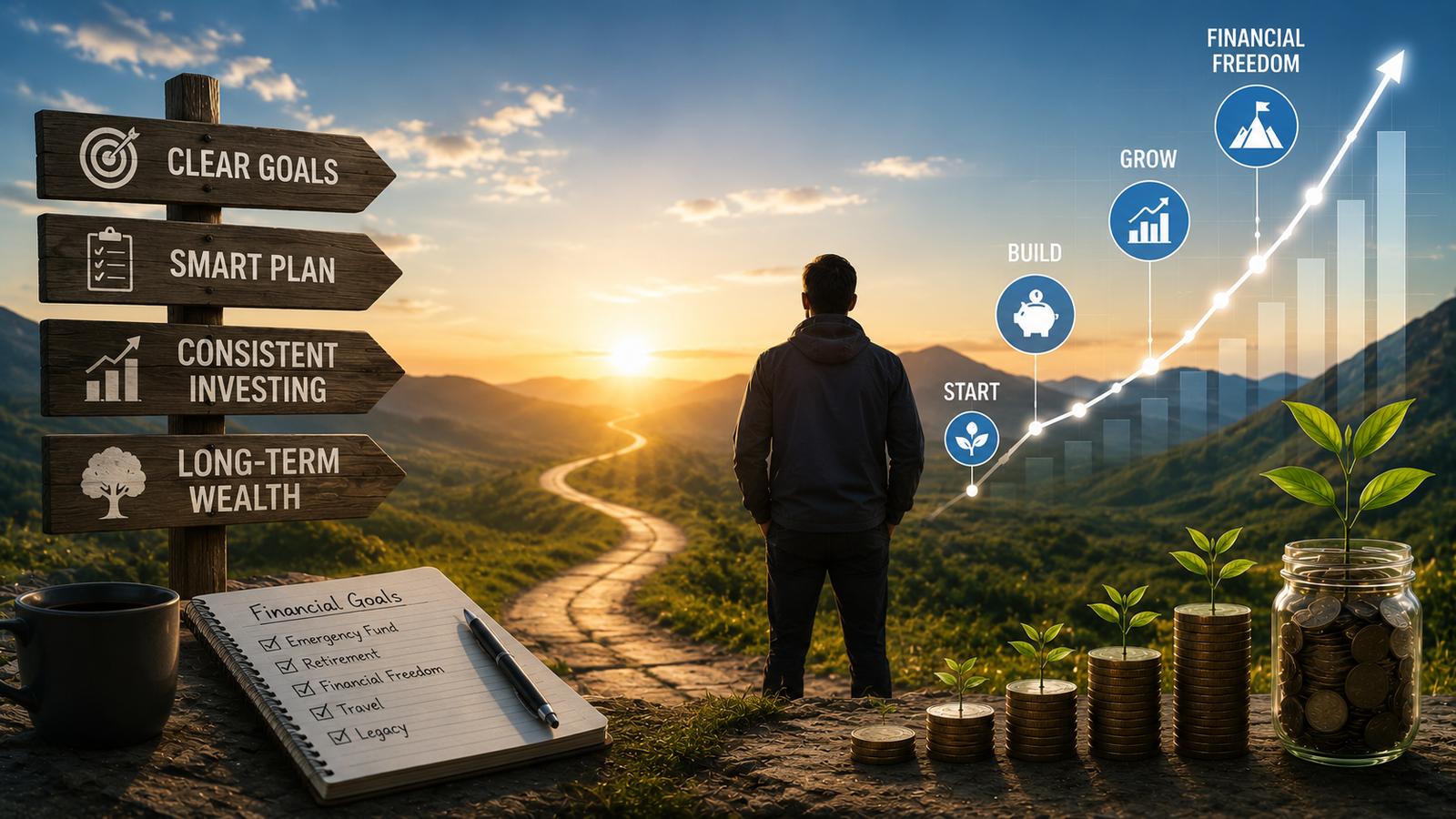
A Practical Action Plan for Building Financial Resilience
Even in a challenging economy, individuals can take meaningful steps.
Step 1: Build an Emergency Fund
Aim for 3–6 months of expenses.
Step 2: Reduce High-Interest Debt
Prioritize credit card balances.
Step 3: Invest Consistently
Even small monthly contributions matter.
Step 4: Increase Financial Education
Knowledge compounds like money.
Step 5: Focus on Long-Term Wealth
Ignore short-term market noise.
Step 6: Own Productive Assets
Stocks, index funds, businesses, and real estate can participate in economic growth.
Frequently Asked Questions
Is the economy actually growing?
Yes, economic growth can occur even when many households face financial challenges.
Why do people feel poorer despite higher incomes?
Because expenses, inflation, housing costs, and debt may rise faster than income.
Is inflation still affecting Americans?
Yes. Even when inflation slows, prices often remain much higher than before.
Why do stock market gains not help everyone?
Not everyone owns significant investment assets.
What is the best defense against rising living costs?
Increasing income, reducing debt, saving consistently, and investing for long-term growth.
Conclusion
The question isn’t whether the economy is growing.
The real question is:
Who is benefiting from that growth?
Economic growth can create enormous opportunities.
But those opportunities are not always distributed evenly.
For many Americans, rising costs, debt burdens, housing challenges, and financial uncertainty continue to create pressure despite positive economic headlines.
The good news is that individuals are not powerless.
By improving financial literacy, reducing debt, investing consistently, and focusing on long-term wealth building, people can position themselves to benefit from future economic growth rather than simply watching it happen.
The economy may grow on its own.
But building wealth requires intentional action.
And the sooner that journey begins, the more powerful the results can become.