
The IPO Everyone Wanted May Be More Complicated Than Investors Think
For years, investors asked the same question:
When will SpaceX finally go public?
Now that the SpaceX IPO has arrived, the excitement is enormous.
Retail investors are paying attention.
Wall Street analysts are building valuation models.
Financial media is covering every price move.
And many people are wondering whether SpaceX could become one of the defining public companies of the next decade.
It is easy to understand the excitement.
SpaceX is not an ordinary company.
It changed the economics of rocket launches.
It built reusable launch systems.
It created Starlink, one of the most ambitious satellite internet networks in history.
It became deeply connected to government, defense, broadband, space infrastructure, and even future artificial intelligence ambitions.
The IPO itself was historic. SpaceX priced its offering at $135 per share, raising $75 billion and valuing the company around $1.77 trillion, according to Reuters.
But while many investors are celebrating, there is another side of the story.
A hidden risk.
Not necessarily because SpaceX is a weak company.
In fact, it may be one of the most important companies of this generation.
The risk is that investors may confuse a great company with a great stock at any price.
That is the danger Elon Musk has hinted at many times across his career: when expectations become too high, even extraordinary execution may not be enough to satisfy the market.
So the real question is not simply:
“Is SpaceX an amazing company?”
The better question is:
“At today’s valuation, what has to go right for investors to earn strong returns?”
That question may matter more than the celebration.
Key Takeaways
- SpaceX’s IPO generated enormous excitement because of the company’s role in rockets, Starlink, defense, and future space infrastructure.
- Reuters reported that SpaceX priced its IPO at $135 per share, raising $75 billion and valuing the company at roughly $1.77 trillion.
- SpaceX shares jumped in their Nasdaq debut, pushing the company’s market value past $2 trillion.
- The hidden risk is valuation: investors may already be pricing in years of future success.
- Barron’s reported that some analysts questioned whether SpaceX’s valuation already reflects much of its growth potential.
- A great business can still be a risky investment if purchased at too high a price.
- Beginners should avoid IPO FOMO and focus on valuation, risk, time horizon, and portfolio diversification.
Why Everyone Is Celebrating the SpaceX IPO
SpaceX is one of the rare companies that feels larger than finance.
It represents ambition.
It represents technological progress.
It represents the possibility of building infrastructure beyond Earth.
That emotional story matters.
Investors are not just buying a company that launches rockets.
They are buying exposure to several powerful narratives:
- Lower-cost space launches
- Global satellite internet
- Defense and government contracts
- Space-based infrastructure
- Commercial satellite deployment
- Potential future Mars-related ambitions
- Possible AI and data infrastructure opportunities
That combination is difficult to find elsewhere in the public markets.
This is why the IPO attracted such intense attention.
Reuters reported that SpaceX shares jumped 19% in their Nasdaq debut, sending the company’s value past $2 trillion.
For investors who believe SpaceX will dominate multiple industries, the enthusiasm is understandable.
But enthusiasm can be dangerous when it replaces analysis.
The Hidden Risk: Expectations May Already Be Too High
The biggest risk for SpaceX investors may not be whether the company is impressive.
It clearly is.
The bigger risk is whether the stock price already assumes too much future success.
This is one of the most important lessons in investing:
A great company is not always a great investment.
Price matters.
Valuation matters.
Expectations matter.
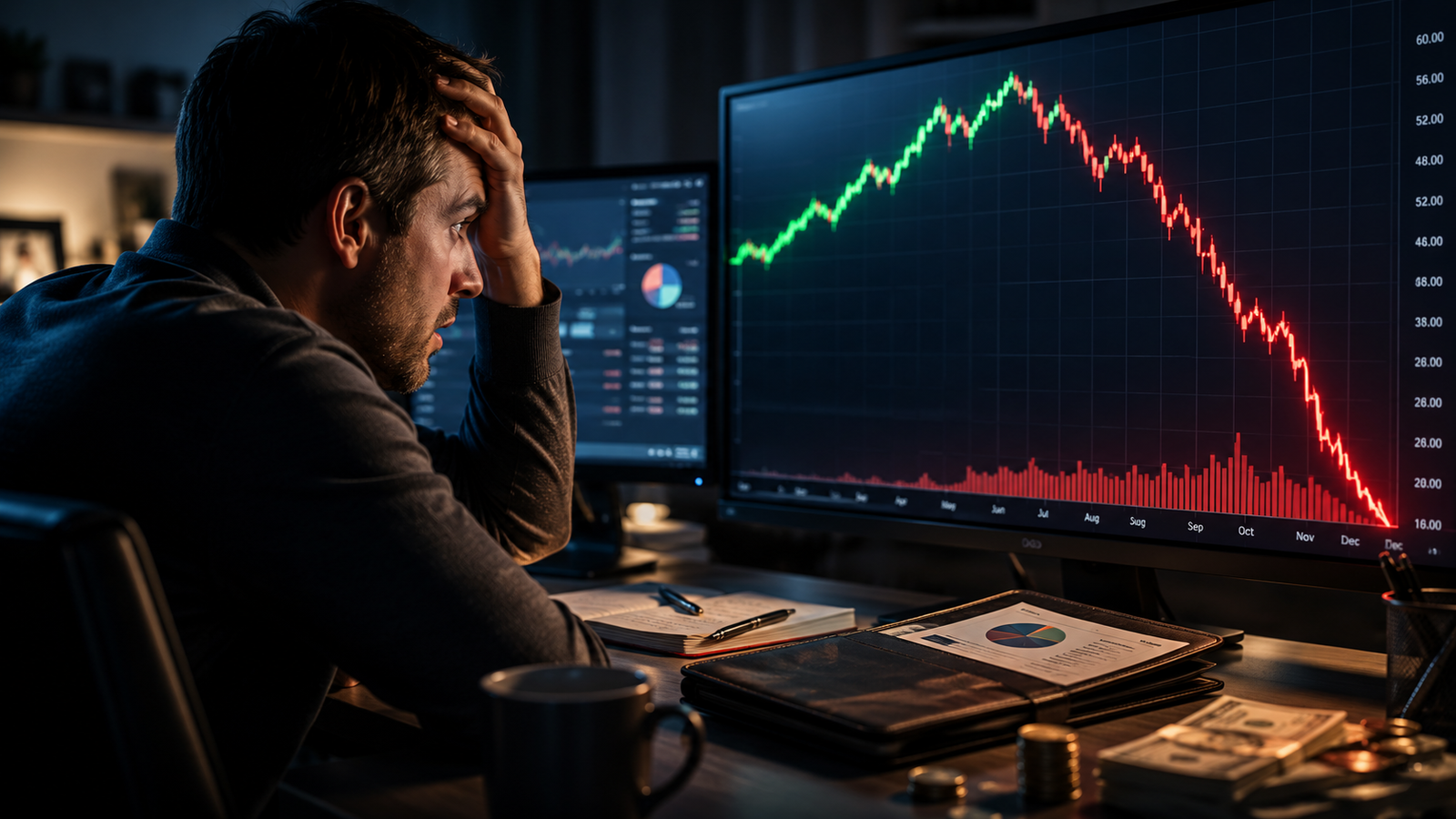
If a stock is priced for perfection, even excellent results may disappoint.
For example, imagine a company grows revenue rapidly, expands margins, and builds new businesses.
That sounds great.
But if the market already expected even faster growth, the stock could still fall.
This is why high-growth IPOs can be so difficult for beginners.
The story may be real.
The company may be exceptional.
But the stock may already reflect years of optimism.
Why Elon Musk May See the Risk More Clearly Than Retail Investors
Elon Musk understands hype better than almost anyone.
He has seen investor enthusiasm build around Tesla.
He has seen markets swing between euphoria and panic.
He has seen how public markets can reward bold visions but punish missed expectations.
That experience matters.
The hidden risk after a major IPO is that public investors often expect smooth progress.
But companies building revolutionary technology rarely move in straight lines.
SpaceX may face:
- Technical delays
- Starship development uncertainty
- Regulatory challenges
- Government contract risk
- Capital intensity
- Competitive pressure
- Valuation compression
- Public market volatility
None of these risks necessarily destroy the long-term story.
But they can create painful short-term stock moves.
And for investors who buy only because of excitement, volatility can be emotionally difficult.
SpaceX Is Not Just a Rocket Company
One reason investors are excited is that SpaceX has multiple business lines.
Launch Services
SpaceX transformed the launch market by developing reusable rocket technology.
This gave the company a major cost advantage and helped it become a dominant player in commercial launches.
Starlink
Starlink may be the most important part of the investment case.
Satellite internet could become a massive global communications business.
If Starlink continues growing, it may help justify a large portion of SpaceX’s valuation.
Government and Defense
SpaceX works with government and defense customers.
These contracts may provide important revenue, but they can also introduce political and regulatory complexity.
Future Infrastructure
Long-term investors may also be pricing in future businesses that do not yet exist at scale.
That is both exciting and risky.
The more future growth investors assume, the more sensitive the stock becomes to disappointment.
The Difference Between Business Quality and Investment Return
This is where many beginners make a mistake.
They assume:
Great company = great stock.
But investing does not work that simply.
Investment returns depend on:
- Business growth
- Profitability
- Starting valuation
- Future expectations
- Market sentiment
- Dilution
- Interest rates
- Investor patience
A mediocre company bought cheaply can sometimes produce strong returns.
A fantastic company bought at an extreme valuation can produce weak returns.
That is why disciplined investors separate admiration from analysis.
You can admire SpaceX and still decide the stock is too expensive.
You can believe in the company and still wait for a better entry point.
That is not pessimism.
That is intelligent investing.
The Valuation Problem Investors Cannot Ignore
According to Barron’s, SpaceX shares fell for a third consecutive session after an analyst questioned the company’s valuation, noting that the stock still traded above its IPO price but faced concerns about whether current valuation already reflected much of the growth story.
That is exactly the risk investors should study.
At a trillion-dollar-plus valuation, SpaceX must justify enormous expectations.
To reward investors meaningfully from here, the company may need to:
- Keep growing Starlink rapidly
- Improve profitability
- Execute on Starship
- Manage capital spending
- Expand addressable markets
- Avoid major regulatory setbacks
- Maintain investor confidence
That is a high bar.
Not impossible.
But high.
The IPO FOMO Trap
IPO investing creates emotional pressure.
People see headlines.
They see first-day gains.
They see social media posts.
They worry that if they do not buy immediately, they will miss the next generational investment.
This feeling is called FOMO: fear of missing out.
FOMO is dangerous because it pushes investors to buy before thinking.
A better approach is to ask:
- What am I actually buying?
- What is the company worth?
- What return do I expect?
- What risks could hurt the stock?
- How much of my portfolio should this represent?
- Can I handle a 30%, 40%, or 50% decline?
If those questions make you uncomfortable, that is a signal to slow down.
What Smart Investors Should Watch Next
Instead of focusing only on the IPO celebration, investors should watch the fundamentals.
1. Revenue Growth
Can SpaceX keep expanding at a pace that supports its valuation?
2. Starlink Economics
Can Starlink generate durable profits, not just exciting subscriber growth?
3. Starship Progress
Can the company execute on its next major technological platform?
4. Cash Burn and Capital Spending
Space businesses can require massive capital.
Investors need to understand how much cash SpaceX must spend to achieve its goals.
5. Valuation Relative to Growth
The higher the valuation, the more growth investors require.
6. Lock-Up Expirations and Share Supply
IPO investors should understand when additional shares may become tradable.
Share supply can affect volatility after an IPO.
Common Mistakes Investors Make With Hot IPOs
Mistake 1: Buying Only Because the Company Is Famous
A famous company is not automatically a good investment.
Mistake 2: Ignoring Valuation
Even revolutionary businesses can be overpriced.
Mistake 3: Investing Too Much Too Soon
Position sizing matters.
A risky IPO should not dominate a beginner’s portfolio.
Mistake 4: Confusing Story With Fundamentals
A powerful story must eventually become earnings and cash flow.
Mistake 5: Selling in Panic
If investors buy without conviction, they often sell during volatility.
A Simple Plan for Beginners
If you are excited about SpaceX but worried about risk, consider a more disciplined framework.
Step 1: Wait for More Public Data
Let the company report several quarters as a public business.
Step 2: Study Starlink Separately
Starlink may be central to the valuation.
Understand its growth, profitability, and competition.
Step 3: Decide on Position Size
Avoid putting too much money into one high-expectation stock.
Step 4: Compare With Alternatives
Would you rather own SpaceX, an S&P 500 index fund, a technology ETF, or a diversified portfolio?
Step 5: Create a Buy Plan
Consider buying gradually rather than all at once.
Step 6: Know Your Sell Rules
Decide in advance what would change your investment thesis.
FAQ
Is SpaceX a good investment after the IPO?
It depends on valuation, growth, profitability, and your risk tolerance. SpaceX may be a great company, but investors still need to determine whether the stock price offers attractive future returns.
Why are investors worried about SpaceX despite the IPO excitement?
Investors are worried about valuation, future expectations, capital intensity, technical execution, and possible volatility after the IPO.
What is the biggest hidden risk?
The biggest hidden risk is that SpaceX’s stock price may already reflect years of future success, leaving little room for disappointment.
Should beginners buy SpaceX stock immediately?
Beginners should be cautious. A gradual approach, combined with diversification and research, may be wiser than buying purely because of IPO hype.
What part of SpaceX matters most for investors?
Starlink, launch dominance, Starship execution, profitability, and long-term capital requirements may be among the most important factors.
Can SpaceX still grow after a huge IPO valuation?
Yes, but the larger the valuation, the more execution is required to generate strong future returns.
Conclusion: Celebrate the Company, But Analyze the Stock
The SpaceX IPO is historic.
There is no denying that.
Few companies have captured investor imagination the way SpaceX has.
It has changed spaceflight.
It has built Starlink.
It has turned science fiction into something closer to infrastructure.
But investors must remember one timeless truth:
A great company is not automatically a great investment at any price.
That may be the hidden risk behind the celebration.
Elon Musk understands how powerful expectations can become.
He also understands how difficult it is to build companies that satisfy those expectations year after year.
For beginners, the lesson is simple.
Do not invest because everyone is celebrating.
Do not buy because headlines are exciting.
Do not confuse innovation with guaranteed returns.
Study the business.
Understand the valuation.
Respect the risks.
Stay diversified.
Think long term.
That is how investors protect themselves from hype while still staying open to extraordinary opportunities.