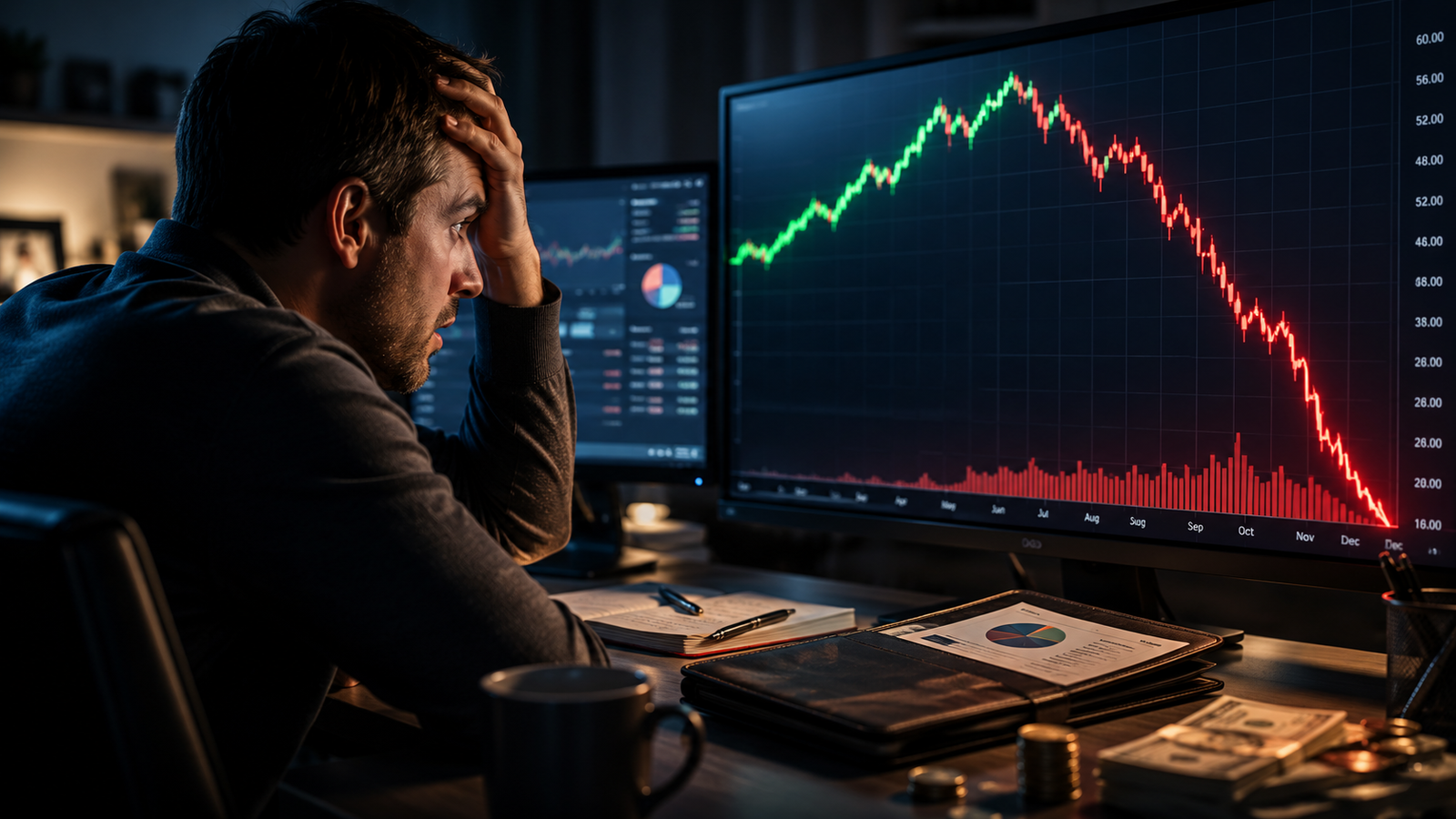

Discover how a Taiwan crisis could affect the global economy, stock markets, AI companies, and investors. Learn the risks, historical lessons, and long-term investment implications.
Imagine waking up tomorrow to headlines reporting that commercial shipping has stopped moving through the Taiwan Strait.
Financial markets open sharply lower.
Technology stocks plunge.
Oil prices surge.
The U.S. dollar strengthens as investors rush toward perceived safe-haven assets.
It sounds dramatic—but this is exactly the type of scenario that governments, central banks, multinational corporations, and institutional investors have been studying for years.
Taiwan has quietly become one of the world’s most strategically important economic hubs. The island produces many of the advanced semiconductors that power artificial intelligence, smartphones, cloud computing, defense systems, and modern manufacturing. Because of this central role, any major disruption could ripple across industries and financial markets worldwide. Analysts at the Center for Strategic and International Studies (CSIS) have argued that a crisis in the Taiwan Strait would impose substantial costs on China, the United States, their allies, and the broader global economy.
Why Taiwan Matters More Than Most Investors Realize
Taiwan represents less than 1% of the world’s population.
Yet it sits at the center of one of the most valuable supply chains on Earth.
The island is home to the world’s leading advanced semiconductor manufacturing ecosystem, supplying chips used in:
- Artificial Intelligence
- Cloud Computing
- Smartphones
- Data Centers
- Electric Vehicles
- Medical Technology
- Industrial Automation
- Consumer Electronics
Without these semiconductors, many of today’s fastest-growing industries would struggle to maintain production.
Taiwan’s Role in the Global Technology Economy
One company illustrates Taiwan’s importance better than any other:
- Taiwan Semiconductor Manufacturing Company (TSMC)
TSMC manufactures the world’s most advanced chips for companies including:
- NVIDIA
- Apple
- AMD
- Qualcomm
- Broadcom
Replacing this manufacturing capacity would take many years and hundreds of billions of dollars in investment.
Why Supply Chains Cannot Be Rebuilt Overnight
Unlike many manufactured products, advanced semiconductors cannot simply be produced somewhere else.
Building a leading-edge semiconductor fabrication plant requires:
- Tens of billions of dollars
- Highly specialized engineers
- Precision manufacturing equipment
- Ultra-pure water
- Stable electricity
- Years of testing
This explains why governments around the world are investing heavily in domestic semiconductor production while still recognizing that diversification will take time.
A Crisis Would Extend Far Beyond Taiwan
Many investors assume that only technology companies would be affected.
The reality is much broader.
A disruption in Taiwan could influence industries such as:
- Artificial Intelligence
- Consumer Electronics
- Automotive Manufacturing
- Defense
- Cloud Infrastructure
- Telecommunications
- Healthcare Technology
- Industrial Equipment
Because semiconductors are embedded in modern production, shortages can spread quickly through global supply chains.
Visualizing the Industries Most Exposed
Industries most exposed to a Taiwan semiconductor disruption
Illustrative relative exposure based on semiconductor dependence.0306090120Artificial Intell…Cloud ComputingConsumer ElectronicsAutomotiveTelecommunicationsIndustrial Manufa…Healthcare Devices
Could Global Stock Markets Crash?
No one knows.
Financial markets are influenced by countless variables, and future outcomes cannot be predicted with certainty.
However, historical experience suggests that markets often react strongly to unexpected geopolitical shocks.
Several factors would likely shape investor behavior during a severe Taiwan-related crisis:
- Flight toward safe-haven assets
- Increased market volatility
- Pressure on technology stocks
- Higher commodity prices
- Supply-chain disruptions
- Reduced corporate earnings expectations
The magnitude of these effects would depend on the nature, duration, and severity of the disruption.
Historical Perspective
Previous geopolitical events demonstrate that markets can experience sharp short-term declines when uncertainty rises.
Examples include:
- The 1990 Gulf War
- The 2001 September 11 attacks
- The 2008 Global Financial Crisis
- The 2020 COVID-19 pandemic
- The 2022 invasion of Ukraine
While every crisis is different, one common lesson is that uncertainty often drives market volatility before longer-term fundamentals reassert themselves.
What Researchers Say
Policy researchers increasingly view Taiwan as one of the world’s most significant economic flashpoints.
A report from CSIS concludes that any realistic crisis in the Taiwan Strait would impose substantial economic costs on China, the United States, allied countries, and the global economy because of the region’s role in trade and advanced semiconductor production.
Separately, analysis from Chatham House argues that a prolonged blockade scenario could produce global economic damage comparable to major historical downturns, while emphasizing that such scenarios are analytical exercises rather than predictions.
Research from the Rhodium Group estimates that a Taiwan conflict could put trillions of dollars of global economic activity at risk through trade disruption and semiconductor shortages, highlighting how deeply integrated Taiwan is in global manufacturing.
Could a Taiwan Crisis Trigger the Next Global Stock Market Crash?
Part 2 — How Markets Could React and Which Companies Would Be Most Affected
How Would the Stock Market Likely React?
Financial markets dislike uncertainty more than almost anything else.
A sudden escalation in the Taiwan Strait would likely trigger a rapid reassessment of risk across global markets. Investors would attempt to price in the potential effects of disrupted trade, higher production costs, supply shortages, and slower global economic growth.
Historically, geopolitical shocks tend to produce three immediate market reactions:
- Increased volatility
- A shift toward defensive assets
- Selling pressure in economically sensitive sectors
Whether those declines evolve into a prolonged bear market would depend on the duration and severity of the disruption.
Which Stock Indexes Could Be Most Sensitive?
Although every market is different, some indexes have greater exposure to semiconductor companies than others.
Nasdaq 100
The Nasdaq would likely receive the greatest attention because many of its largest constituents depend directly or indirectly on advanced semiconductor production.
Technology giants rely heavily on AI chips, cloud infrastructure, smartphones, and high-performance computing.
S&P 500
The S&P 500 has broader sector diversification.
Technology would likely experience greater volatility than sectors such as utilities, consumer staples, and healthcare, but the overall impact would depend on how quickly supply chains recovered.
Asian Markets
Asian equity markets could experience the largest immediate impact due to their proximity and integration with regional manufacturing networks.
Countries closely connected to semiconductor production include:
- South Korea
- Japan
- Taiwan
- Singapore
- Malaysia
- Vietnam
These economies play important roles in chip manufacturing, testing, packaging, and electronics assembly.
The Companies Investors Would Watch Closely
NVIDIA
NVIDIA designs many of the world’s leading AI processors but depends heavily on external manufacturing.
Its most advanced GPUs are produced by TSMC.
If manufacturing capacity were disrupted, NVIDIA could face:
- shipment delays
- production bottlenecks
- longer customer wait times
- temporary revenue pressure
The company’s long-term competitive position would depend on how quickly manufacturing could normalize.
Apple
Apple depends extensively on advanced chips manufactured in Taiwan for products including:
- iPhone
- iPad
- Mac
- Apple Silicon processors
Any prolonged disruption could affect production schedules and product launches.
AMD
AMD follows a business model similar to NVIDIA.
It designs processors while outsourcing manufacturing to advanced semiconductor foundries.
Supply disruptions could slow deliveries of CPUs, GPUs, and AI accelerators.
Qualcomm
Qualcomm supplies processors used in smartphones and connected devices worldwide.
Semiconductor shortages could reduce handset production and delay new product launches.
TSMC
TSMC would naturally become the center of investor attention.
The company manufactures advanced chips for many of the world’s largest technology businesses.
Its importance explains why analysts often describe Taiwan’s semiconductor industry as the world’s “silicon shield.”
Which Sectors Could Face the Greatest Pressure?
Technology would likely be the first sector investors examine, but several others could also experience disruption.
| Sector | Potential Impact |
|---|---|
| Artificial Intelligence | Very High |
| Semiconductors | Very High |
| Consumer Electronics | High |
| Cloud Computing | High |
| Automotive | High |
| Telecommunications | Moderate to High |
| Industrial Manufacturing | Moderate |
| Healthcare Technology | Moderate |
The severity would depend on whether the disruption lasted weeks, months, or longer.
Supply Chains Could Become the Biggest Challenge
Modern manufacturing depends on thousands of specialized suppliers.
A semiconductor shortage would affect far more than chip companies.
Manufacturers of automobiles, industrial machinery, medical devices, networking equipment, and consumer electronics all rely on advanced semiconductors.
The semiconductor shortage during the COVID-19 period demonstrated how quickly supply constraints can reduce industrial output. Research from the Rhodium Group notes that a Taiwan conflict would likely produce disruptions significantly larger than those experienced during the 2021 chip shortage.
Investor Psychology During Geopolitical Shocks
Market movements are influenced by both economic fundamentals and investor sentiment.
During periods of elevated uncertainty, investors often seek assets perceived as relatively defensive.
Historically, these have included:
- U.S. Treasury securities
- Cash
- Gold
- Certain defensive equity sectors
Technology companies may experience larger short-term price swings because expectations for future growth are reassessed.
Could Artificial Intelligence Slow Down?
Artificial intelligence depends on advanced computing hardware.
Training large AI models requires enormous quantities of GPUs, networking equipment, high-bandwidth memory, and specialized data-center infrastructure.
If semiconductor production were interrupted, AI deployment could slow—not because demand disappears, but because hardware availability becomes more limited.
This distinction is important.
A temporary slowdown in hardware production does not necessarily reduce the long-term importance of artificial intelligence.
The “Silicon Shield” Theory
Many analysts refer to Taiwan’s semiconductor leadership as the “Silicon Shield.”
The concept suggests that Taiwan’s central role in global chip production creates strong economic incentives for many countries to preserve stability in the region.
Whether this theory would prevent a future crisis is impossible to know.
However, it illustrates how deeply modern technology has become intertwined with geopolitics.
Key Takeaways for Investors
Rather than attempting to predict geopolitical events, investors may benefit from focusing on questions such as:
- How diversified is my portfolio?
- Which companies depend heavily on semiconductor supply chains?
- Am I investing based on long-term fundamentals or short-term headlines?
- Do I understand how global manufacturing affects corporate earnings?
Answering these questions often provides more value than trying to forecast the timing of geopolitical events.
Could a Taiwan Crisis Trigger the Next Global Stock Market Crash?
Potential Winners If Companies Diversify Supply Chains
History shows that periods of geopolitical uncertainty often accelerate long-term investment trends rather than create entirely new ones.
If companies continue reducing supply-chain concentration, several industries could benefit over the coming decade.
1. Semiconductor Equipment Manufacturers
Building new semiconductor fabrication plants requires highly specialized equipment.
Companies that supply lithography systems, inspection tools, deposition equipment, and manufacturing software may benefit from increased capital spending as new facilities are built around the world.
2. Industrial Automation
Modern semiconductor factories depend heavily on automation.
As manufacturers expand production capacity, demand for robotics, factory automation systems, and precision manufacturing technologies may continue growing.
3. Construction and Infrastructure
Advanced semiconductor facilities require billions of dollars in investment.
Large-scale construction projects often create demand for engineering firms, industrial equipment suppliers, electrical infrastructure, and specialized building materials.
4. Data Center Infrastructure
Artificial intelligence continues to drive demand for cloud computing.
Even if supply chains experience temporary disruptions, long-term investment in data centers, networking equipment, cooling technologies, and electrical infrastructure is expected to remain significant.
5. Cybersecurity
Periods of geopolitical tension frequently increase investment in cybersecurity.
Governments and corporations may strengthen digital infrastructure to improve resilience against cyber threats.
Industries That Could Face Greater Challenges
Not every industry would respond in the same way.
Businesses that rely heavily on advanced semiconductors could experience higher production costs if supply became constrained.
Examples include:
- Consumer electronics
- Smartphone manufacturers
- Automotive companies
- Artificial intelligence hardware
- Networking equipment
- Cloud infrastructure providers
The impact would depend on inventory levels, supplier diversification, and the duration of any disruption.
What Long-Term Investors Can Learn
One of the most important lessons from previous global crises is that uncertainty is a permanent feature of investing.
Markets have navigated:
- Oil shocks
- Financial crises
- Global pandemics
- Regional conflicts
- Supply-chain disruptions
- Inflationary periods
While each event creates unique challenges, diversified long-term portfolios have historically demonstrated resilience over extended periods.
That does not eliminate risk, but it highlights the importance of maintaining a disciplined investment process.
Practical Portfolio Strategies
Although every investor has different objectives, several principles are commonly discussed by financial professionals during periods of heightened uncertainty.
Diversification
Avoid concentrating investments in a single company, sector, or country.
Diversification does not eliminate risk, but it can reduce the impact of individual events.
Focus on Financial Strength
Companies with:
- strong balance sheets
- consistent cash flow
- diversified revenue sources
- competitive advantages
may be better positioned to navigate periods of uncertainty.
Maintain a Long-Term Perspective
Short-term market volatility does not necessarily change long-term business fundamentals.
Many experienced investors distinguish between temporary market sentiment and lasting changes in corporate value.
Review Supply-Chain Exposure
Understanding where companies manufacture products—and how diversified those operations are—can provide valuable context when evaluating long-term investments.
Expert Perspective
Taiwan’s importance extends beyond geopolitics.
It represents one of the world’s most critical manufacturing ecosystems for advanced semiconductors.
Rather than viewing Taiwan solely as a source of geopolitical risk, investors may benefit from recognizing how interconnected the modern economy has become.
Semiconductor design, manufacturing, packaging, software, logistics, cloud computing, and artificial intelligence all depend on a highly specialized global network.
Understanding these relationships can help investors evaluate both opportunities and risks more effectively.
Frequently Asked Questions
Could a Taiwan crisis automatically cause a global stock market crash?
Not necessarily.
Financial markets respond to many factors simultaneously, including the severity, duration, and economic consequences of any disruption.
Why is Taiwan so important to technology companies?
Taiwan is a global leader in advanced semiconductor manufacturing, supplying chips used in artificial intelligence, smartphones, cloud computing, automotive systems, and many other technologies.
Which industries could be most affected?
Technology, semiconductors, consumer electronics, automotive manufacturing, telecommunications, and industrial automation could all experience varying degrees of disruption.
Could artificial intelligence continue growing?
Yes.
A temporary reduction in semiconductor supply could slow deployment, but it would not necessarily reduce long-term demand for AI technologies.
Why are semiconductor factories difficult to replace?
Leading-edge fabrication facilities require enormous capital investment, specialized engineering expertise, advanced equipment, stable utilities, and years of development.
Should investors sell technology stocks because of geopolitical uncertainty?
Investment decisions should reflect personal financial goals, diversification, time horizon, and risk tolerance rather than short-term headlines.
Could governments reduce dependence on Taiwan?
Many governments are investing in domestic semiconductor production, but developing comparable manufacturing ecosystems requires significant time and resources.
What is the “Silicon Shield”?
The term refers to the idea that Taiwan’s central role in global semiconductor manufacturing creates strong economic incentives for many countries to maintain regional stability.
How should investors prepare?
Many financial professionals emphasize diversification, long-term planning, periodic portfolio reviews, and understanding supply-chain exposure.
Is this article investment advice?
No.
This article is provided solely for educational and informational purposes.
Final Thoughts
Taiwan has become one of the most strategically important economies in the modern world—not because of its size, but because of its role in powering the digital age.
From artificial intelligence and cloud computing to electric vehicles and medical technology, advanced semiconductors have become essential infrastructure for the global economy.
Whether a future geopolitical crisis emerges or not cannot be predicted with certainty.
What investors can do, however, is understand how global supply chains function, recognize the importance of diversification, and make investment decisions based on long-term fundamentals rather than short-term uncertainty.
History has repeatedly shown that markets face periods of volatility.
It has also shown that disciplined investors who focus on quality businesses, sound risk management, and long-term objectives are often better positioned to navigate an uncertain world.
Key Takeaways
- Taiwan plays a critical role in the global semiconductor supply chain.
- A significant disruption could affect technology, manufacturing, trade, and financial markets.
- Artificial intelligence companies depend heavily on advanced semiconductor production.
- Diversification remains one of the most effective tools for managing long-term investment risk.
- Understanding supply chains is increasingly important for modern investors.
- Geopolitical headlines should be considered alongside economic fundamentals rather than viewed in isolation.
References
For readers interested in learning more, the following organizations provide valuable research and analysis:
- Center for Strategic and International Studies (CSIS)
- Chatham House
- Rhodium Group
- Semiconductor Industry Association (SIA)
- International Monetary Fund (IMF)
- World Bank
- Organisation for Economic Co-operation and Development (OECD)
- Taiwan Semiconductor Manufacturing Company (TSMC) Investor Relations
- NVIDIA Investor Relations
- U.S. Department of Commerce
Educational Disclaimer
This article is intended solely for educational and informational purposes. It does not constitute financial, legal, tax, or investment advice. Market conditions, geopolitical developments, and economic outcomes are inherently uncertain. Investors should conduct independent research and consult qualified financial professionals before making investment decisions.