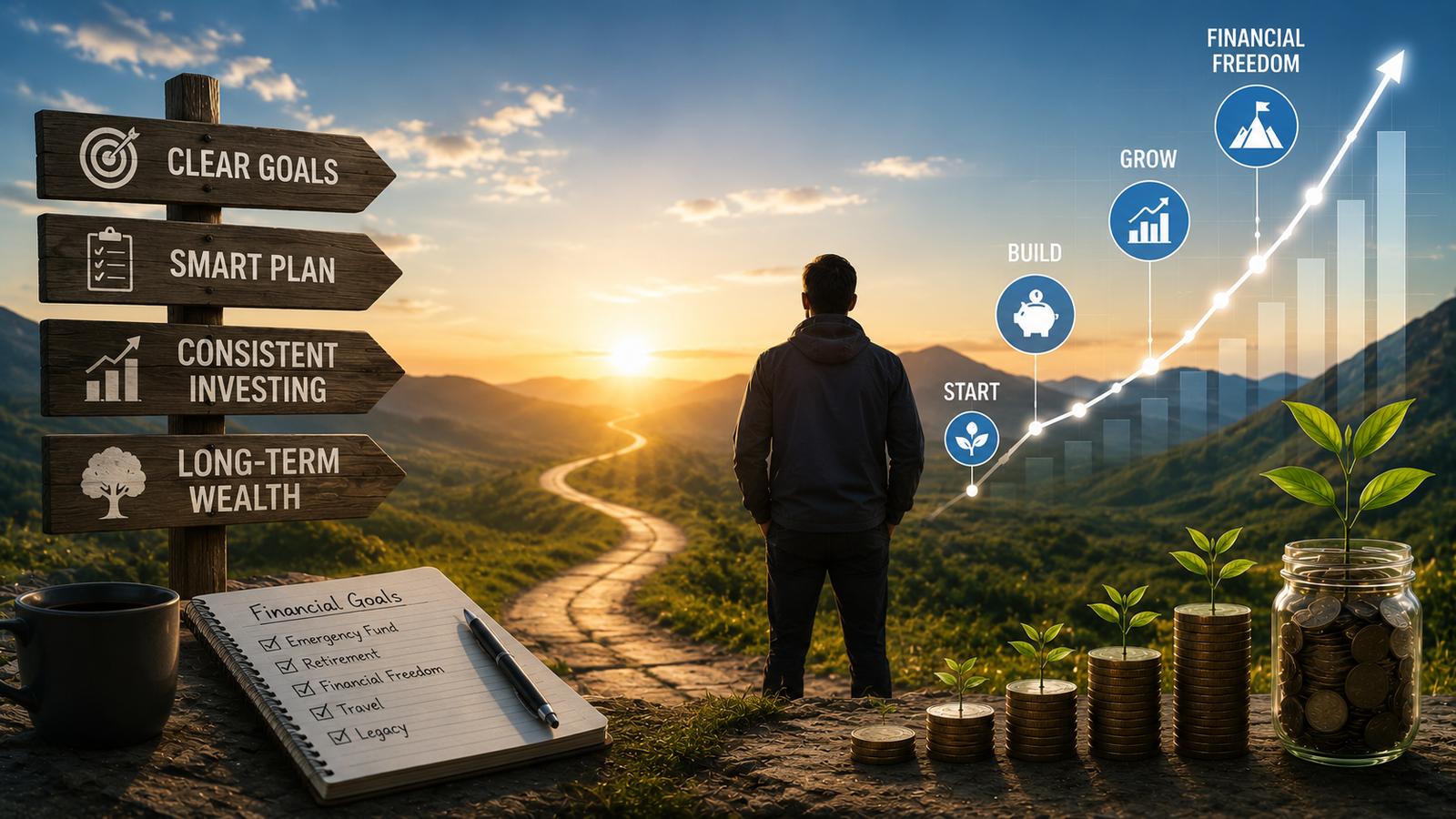

A seven-figure portfolio changes the investing conversation. Instead of wondering how to reach the first million, investors begin asking a different question: How can I make this money work harder without taking unnecessary risks? One ETF that frequently enters that discussion is the Schwab U.S. Dividend Equity ETF, better known by its ticker symbol, SCHD.
For years, SCHD has attracted income-focused investors because of its combination of quality companies, growing dividends, and relatively low expenses. Unlike many high-yield investments that sacrifice long-term growth for immediate income, SCHD aims to deliver both rising dividend payments and capital appreciation. That balance has made it one of the most popular dividend ETFs in the United States.
Naturally, many investors wonder whether a portfolio worth $1 million invested in SCHD could eventually become $2 million. The answer is more nuanced than a simple yes or no. Market returns are never guaranteed, dividend payments fluctuate, and future economic conditions remain uncertain. Still, historical performance, dividend growth, and the mathematics of compounding provide valuable clues about what may be possible over time.
In this guide, we’ll break down Can SCHD Double a $1 Million Portfolio? Here’s the Math using realistic assumptions instead of unrealistic promises. You’ll learn how total return affects wealth creation, why dividend reinvestment matters so much, and what factors could either accelerate or delay your journey toward doubling your portfolio. By the end, you’ll have a much clearer understanding of whether SCHD deserves a place in a long-term income strategy.
Key Takeaways
- SCHD combines dividend income with long-term capital appreciation.
- Doubling a $1 million portfolio depends primarily on total return, not dividend yield alone.
- Dividend reinvestment significantly accelerates compound growth.
- Time is one of the most powerful drivers of wealth accumulation.
- Market downturns can create opportunities for long-term investors.
- SCHD focuses on financially strong companies with consistent dividend histories.
- Inflation, taxes, and withdrawal rates all influence long-term outcomes.
- Investors should focus on realistic expectations rather than guaranteed returns.
What Makes SCHD Different From Other Dividend ETFs?
Dividend investing has become increasingly popular among Americans seeking reliable passive income. However, not all dividend ETFs follow the same strategy. Some prioritize the highest current yields, while others focus on companies capable of increasing dividend payments year after year.
SCHD belongs firmly in the second category.
Rather than chasing unusually high yields that may prove unsustainable, the fund screens companies based on several quality metrics. These include profitability, cash flow, return on equity, dividend consistency, and financial strength. As a result, the portfolio generally consists of mature businesses with durable competitive advantages instead of companies simply offering the largest payouts.
This disciplined methodology helps reduce exposure to businesses that may cut dividends during economic downturns. Although no investment is completely immune to market volatility, emphasizing quality can improve long-term resilience.
Another important advantage is diversification. Instead of relying on a handful of dividend-paying companies, investors gain exposure to dozens of large U.S. businesses operating across multiple sectors. That diversification reduces company-specific risk while still providing attractive income potential.
Many experienced investors also appreciate SCHD’s relatively low expense ratio. Lower costs allow more of the portfolio’s returns to remain invested, creating a stronger compounding effect over decades.
Understanding the Math Behind Portfolio Growth
Many people assume that doubling a portfolio depends entirely on stock prices rising. In reality, long-term returns come from several different sources working together.
These include:
- Capital appreciation
- Dividend income
- Dividend growth
- Dividend reinvestment
- Compound returns
Imagine a portfolio producing a combination of price appreciation and dividends that results in an average annual total return of approximately 10%. While future returns can never be predicted, this example helps illustrate the power of compounding.
After one year:
$1,000,000 becomes approximately $1,100,000.
The following year, returns are earned not only on the original investment but also on the gains from the previous year.
That process repeats every year.
Eventually, compounding begins to generate larger dollar gains than the investor’s original annual income.
This phenomenon explains why many financial advisors encourage investors to remain patient during periods of market volatility instead of attempting to time every market movement.
The longer money remains invested, the greater the impact of exponential growth.
Why Dividend Reinvestment Changes Everything
Dividend payments often appear small during the early years of investing.
However, each dividend used to purchase additional ETF shares creates another source of future dividend income.
Over time, the cycle becomes remarkably powerful:
- Dividends buy additional shares.
- Those shares generate additional dividends.
- New dividends purchase even more shares.
- Capital appreciation compounds on a growing share count.
This positive feedback loop explains why two investors with identical portfolios can experience dramatically different long-term outcomes depending on whether they spend or reinvest their dividend income.
For younger investors still building wealth, automatic dividend reinvestment can become one of the most effective wealth-building tools available.
Can SCHD Really Double a $1 Million Portfolio?
This is the question many income investors eventually ask after reaching a significant portfolio milestone.
At first glance, doubling $1 million may seem incredibly difficult. Yet history shows that long-term investors who remain disciplined often experience portfolio growth that exceeds their initial expectations. The key is understanding what actually drives those returns.
SCHD does not rely on a single source of performance. Instead, investors benefit from several engines working together:
- Dividend income
- Dividend growth
- Capital appreciation
- Reinvestment
- Compounding over time
Each component plays an important role. Remove one of them, and portfolio growth slows considerably. Combine all of them, however, and the results can become surprisingly powerful over a decade or two.
Rather than guessing, let’s examine the mathematics behind different return scenarios.
The Rule of 72
One of the simplest tools used by financial professionals is the Rule of 72.
It estimates how long an investment takes to double using this formula:
Years to Double = 72 ÷ Annual Return
Although it is only an approximation, the Rule of 72 provides a useful starting point.
| Average Annual Return | Estimated Years to Double |
|---|---|
| 6% | 12 years |
| 7% | 10.3 years |
| 8% | 9 years |
| 9% | 8 years |
| 10% | 7.2 years |
| 11% | 6.5 years |
| 12% | 6 years |
Immediately, an important lesson becomes clear.
Even a modest difference in annual returns can shorten the time required to double a portfolio by several years.
That is why reducing unnecessary fees, remaining invested, and consistently reinvesting dividends matter so much over the long run.
Three Possible SCHD Scenarios
Future returns are impossible to predict.
Instead of relying on unrealistic promises, experienced investors often evaluate multiple scenarios.
Let’s assume a $1 million portfolio remains fully invested while all dividends are reinvested.
Conservative Scenario
Average annual return: 7%
Possible reasons:
- Slower economic growth
- Higher interest rates
- Moderate corporate earnings
Portfolio progression:
Year 0
$1,000,000
Year 5
Approximately $1,403,000
Year 10
Approximately $1,967,000
The portfolio nearly doubles after roughly ten years.
Base Case Scenario
Average annual return: 9%
This scenario assumes:
- Healthy dividend growth
- Stable corporate profits
- Moderate stock appreciation
Portfolio progression:
Year 0
$1,000,000
Year 5
Approximately $1,539,000
Year 10
Approximately $2,367,000
Here, the portfolio comfortably exceeds the $2 million mark.
Optimistic Scenario
Average annual return: 11%
Possible drivers include:
- Strong economic expansion
- Rising corporate earnings
- Accelerating dividend growth
- Favorable market valuations
Portfolio progression:
Year 0
$1,000,000
Year 5
Approximately $1,685,000
Year 10
Approximately $2,839,000
Although no one should expect this outcome every decade, history has shown that periods of strong market performance do occur.
Why Dividend Growth Matters More Than Dividend Yield
Many new investors become obsessed with finding the highest dividend yield.
Unfortunately, that approach often backfires.
An unusually high yield can sometimes signal financial distress rather than opportunity.
SCHD takes a different path.
Instead of simply selecting the biggest dividend payers, the ETF focuses on businesses capable of increasing their distributions over time.
That distinction makes an enormous difference.
Imagine two portfolios.
Portfolio A produces a 7% dividend yield that never grows.
Portfolio B starts with a lower yield but increases dividend payments by 8% every year.
Initially, Portfolio A appears superior.
After several years, however, Portfolio B often catches up and eventually generates significantly more income.
Growing dividends also support higher stock prices over long investment horizons because companies that consistently increase shareholder payouts frequently exhibit healthy cash flows and disciplined capital allocation.
This combination creates a powerful wealth-building engine.
Reinvesting Dividends Accelerates Compounding
Many investors underestimate how much dividend reinvestment contributes to total returns.
Consider two hypothetical investors.
Investor One spends every dividend received.
Investor Two automatically reinvests every payment.
Both own exactly the same number of SCHD shares on day one.
Ten years later, their portfolios can look dramatically different.
Investor Two owns more ETF shares.
Those additional shares produce even more dividends.
Eventually, the gap widens every single year.
This is why experienced investors often describe dividend reinvestment as a “snowball.”
It begins slowly.
Over time, however, momentum increases until portfolio growth becomes largely self-sustaining.
Factors That Could Delay Doubling Your Portfolio
While the mathematics of compounding are powerful, investors should also recognize that several factors can reduce long-term returns.
These include:
Inflation
Higher inflation reduces purchasing power.
Even if your portfolio doubles, rising living costs may limit the increase in real wealth.
Taxes
Taxes on dividends and capital gains can reduce after-tax returns, particularly when investments are held in taxable brokerage accounts instead of tax-advantaged retirement accounts.
Market Corrections
Temporary declines are inevitable.
Bear markets may delay portfolio growth by several years.
Historically, however, diversified investors who stayed invested have generally recovered over time.
Emotional Investing
Fear and greed often become an investor’s biggest enemies.
Selling during market crashes or chasing speculative investments after major rallies frequently leads to disappointing long-term results.
Maintaining discipline remains one of the greatest competitive advantages any investor can develop.
What History Suggests About Long-Term Dividend Investors
Although past performance never guarantees future results, historical evidence offers an encouraging perspective.
Dividend-focused investors have benefited from several long-term advantages:
- Lower portfolio volatility compared with many growth-only strategies.
- A steady stream of cash flow during market downturns.
- The opportunity to buy additional shares when prices fall.
- Growing income that can help offset inflation over time.
Perhaps most importantly, dividend investing encourages patience.
Instead of focusing on daily market fluctuations, investors learn to evaluate business quality, dividend sustainability, and long-term cash generation.
That mindset often leads to better financial decisions over decades rather than months.
Expert Insights: What Most Investors Get Wrong About SCHD
After decades of studying dividend investing and watching countless market cycles unfold, one lesson stands above the rest: successful investing is rarely about finding the “perfect” ETF. Instead, it comes down to building a disciplined process and sticking with it through both bull and bear markets.
SCHD is no exception.
Many investors buy the fund expecting immediate wealth. Others sell too quickly after a market correction. Both approaches ignore the fundamental principle that has historically rewarded long-term investors: patience.
Below are some of the most common mistakes investors make—and how to avoid them.
Mistake 1: Focusing Only on Dividend Yield
A higher dividend yield may seem attractive at first glance. However, yield alone tells only part of the story.
A company with an unsustainably high payout ratio may eventually reduce or eliminate its dividend. On the other hand, businesses with moderate yields and strong earnings growth often deliver much better long-term returns.
SCHD emphasizes quality over headline yield, which helps explain why many long-term investors prefer it to higher-yield alternatives.
Mistake 2: Ignoring Total Return
Dividend income is important, but it is only one component of investment performance.
A portfolio grows through:
- Dividend income
- Capital appreciation
- Dividend growth
- Reinvestment
Focusing exclusively on cash payments while ignoring share-price appreciation can lead to poor investment decisions.
Mistake 3: Trying to Time the Market
Waiting for the “perfect” buying opportunity often results in staying on the sidelines for months—or even years.
History has repeatedly shown that remaining invested has generally been more rewarding than attempting to predict short-term market movements.
Consistent investing usually beats perfect timing.
Mistake 4: Spending Every Dividend
Receiving dividend income feels rewarding.
Nevertheless, investors in the accumulation phase often benefit more from reinvesting those payments.
Each reinvested dividend purchases additional shares, which can generate even more dividends in the future.
Compounding works best when given enough time.
Mistake 5: Expecting SCHD to Double Quickly
Some investors hope to double their portfolio in just a few years.
That expectation is rarely realistic.
Even outstanding investments require time to compound.
A patient investor who allows capital to grow over ten, fifteen, or twenty years generally enjoys much stronger results than someone constantly chasing the next hot investment.
SCHD vs Other Popular Investment Strategies
Different investors pursue different goals.
Some prioritize maximum growth, while others seek reliable passive income.
The table below highlights several common approaches.
| Strategy | Income Potential | Growth Potential | Volatility | Best For |
|---|---|---|---|---|
| SCHD | High | High | Moderate | Long-term dividend investors |
| S&P 500 Index Fund | Moderate | High | Moderate | Growth-oriented investors |
| High-Yield Dividend Stocks | Very High | Moderate | Higher | Income-focused investors |
| Treasury Bonds | Low | Low | Very Low | Capital preservation |
| REIT Portfolio | High | Moderate | Moderate to High | Income and diversification |
No single strategy is ideal for every investor.
Many experienced investors combine several asset classes to create a diversified portfolio that balances income, growth, and risk.
Action Plan: How to Build a Long-Term SCHD Strategy
Reading about investing is valuable.
Taking action is even more important.
Here is a practical roadmap you can begin implementing today.
Step 1: Define Your Goal
Ask yourself:
- Do you want passive income?
- Are you building retirement wealth?
- Is long-term capital appreciation your primary objective?
Your answers will shape your investment strategy.
Step 2: Invest Consistently
Rather than waiting for the perfect market environment, consider investing on a regular schedule.
Dollar-cost averaging helps reduce the emotional impact of market volatility.
Step 3: Reinvest Dividends
Automatic dividend reinvestment allows your portfolio to compound without requiring constant attention.
Small reinvestments today may become meaningful wealth decades later.
Step 4: Stay Diversified
Even though SCHD holds dozens of companies, many investors also diversify across:
- Broad-market ETFs
- International stocks
- Bonds
- REITs
- Cash reserves
Diversification helps reduce overall portfolio risk.
Step 5: Think in Decades, Not Months
Successful investing rarely happens overnight.
The investors who build lasting wealth usually remain focused on long-term objectives rather than short-term market headlines.
Patience often becomes their greatest advantage.
Frequently Asked Questions (FAQ)
1. Can SCHD realistically double a $1 million portfolio?
Yes, it is possible. However, the outcome depends on future total returns, dividend growth, reinvestment, and the length of time the portfolio remains invested. There are no guarantees.
2. How long could it take to double a $1 million SCHD portfolio?
Using the Rule of 72, a portfolio earning an average annual return of about 9% could double in roughly eight years. Actual results will vary.
3. Does SCHD pay monthly dividends?
No. SCHD typically distributes dividends on a quarterly basis.
4. Is SCHD suitable for retirees?
Many retirees appreciate SCHD because it combines dividend income with exposure to financially strong companies. Even so, every retirement plan should consider individual income needs, risk tolerance, and tax circumstances.
5. Should I reinvest my SCHD dividends?
For investors focused on long-term wealth accumulation, reinvesting dividends can significantly enhance compounding. Those relying on portfolio income may instead choose to receive dividends in cash.
6. Is SCHD risk-free?
No.
Like every stock ETF, SCHD can experience market declines. Investors should be prepared for periods of volatility and avoid assuming that past performance guarantees future results.
7. Can SCHD outperform the S&P 500?
Some periods favor dividend-focused investing, while others favor growth stocks.
Neither outcome is guaranteed. Performance depends on economic conditions, corporate earnings, valuation levels, and investor sentiment.
Final Thoughts
A $1 million portfolio represents a remarkable financial milestone, but reaching that number is only part of the journey. The next challenge is preserving and growing that wealth responsibly.
SCHD has earned a strong reputation among dividend investors because it emphasizes financially healthy companies, consistent dividend growth, and low investment costs. Those characteristics make it an appealing option for investors seeking a balance between passive income and long-term appreciation.
Still, the question “Can SCHD Double a $1 Million Portfolio? Here’s the Math” does not have a guaranteed answer. Markets evolve, interest rates change, and economic cycles influence returns. What history does suggest, however, is that disciplined investing, dividend reinvestment, diversification, and patience have consistently rewarded long-term investors far more often than short-term speculation.
Rather than chasing extraordinary returns, focus on building a strategy you can follow through every market cycle. A portfolio managed with discipline today has a far greater chance of supporting your financial goals tomorrow.
Whether your objective is retirement, financial independence, or creating lasting wealth for future generations, the most powerful investment tool is often not a particular ETF—but your ability to stay invested and let compounding work over time.
Suggested Internal Links
- Best Dividend Stocks for Long-Term Investors
- How to Build a Dividend Portfolio
- SCHD vs VOO: Which ETF Is Better?
- REIT Investing for Passive Income
- How Compound Interest Builds Wealth
- Best ETFs for Retirement
- Warren Buffett Investing Principles
Authoritative External Sources
For readers who want to explore the topic further, these organizations provide reliable, research-based information: