
Discover why most millionaires avoid checking their investment portfolios every day. Learn the psychology behind successful investing and how patience can lead to greater long-term wealth.
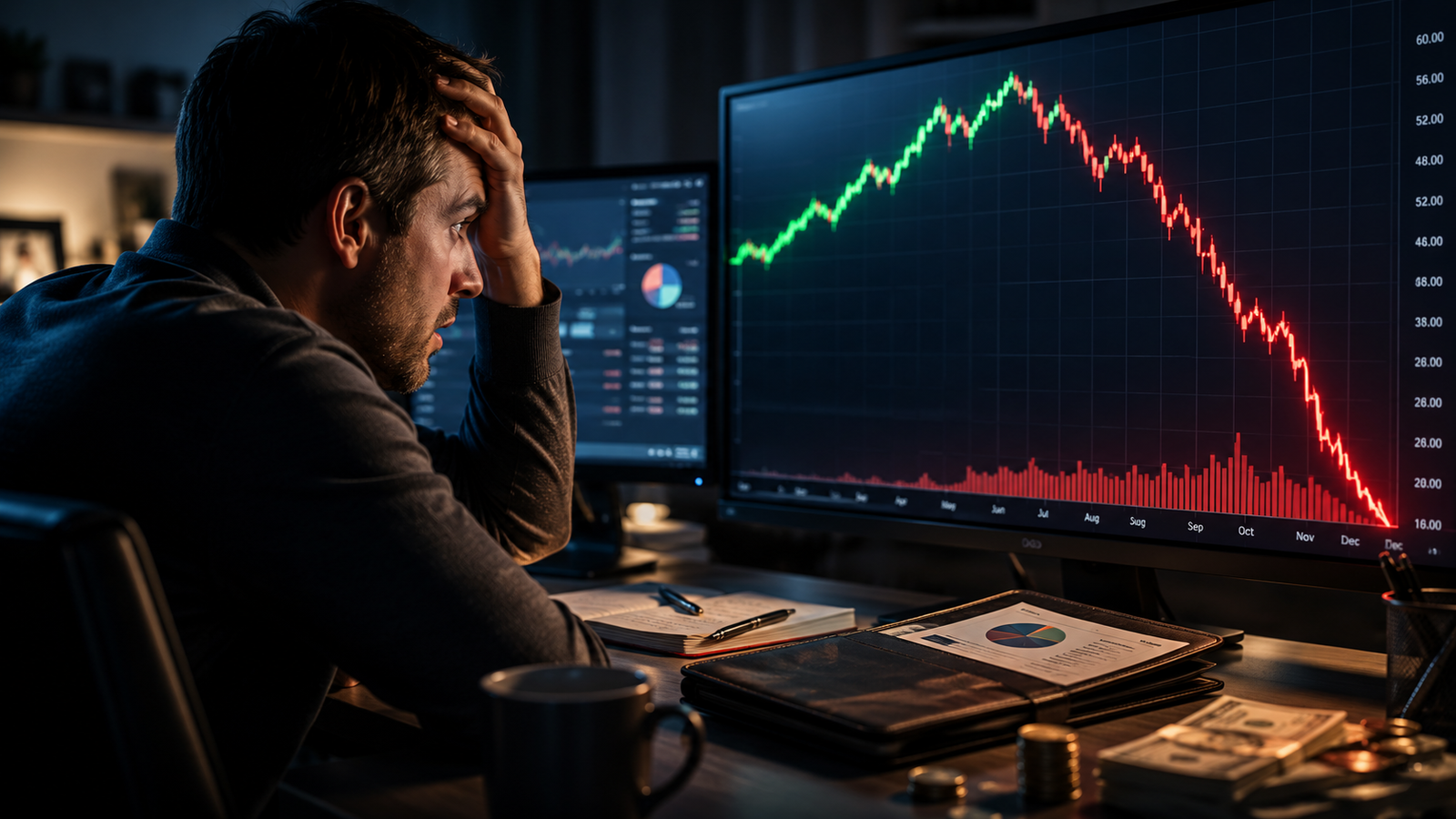
Imagine opening your investment account every single morning before breakfast.
The market is down 2%.
A few hours later, it’s recovered.
By lunchtime, another stock has fallen 5%.
By dinner, your portfolio is back where it started.
Now imagine repeating this routine every day for years.
This is exactly how many investors unintentionally create unnecessary stress—and often make costly financial mistakes.
Surprisingly, people who have built substantial wealth rarely behave this way.
While many beginner investors obsess over daily market fluctuations, most millionaires focus on something entirely different: the long-term direction of their wealth rather than the short-term movements of their investments.
This isn’t because they don’t care about money.
It’s because they understand a fundamental principle that has been demonstrated repeatedly across decades of market history:
Constant monitoring often leads to emotional decisions, and emotional decisions frequently produce poor investment results.
Behavioral finance research has consistently shown that investors who react emotionally to temporary market movements are more likely to buy high, sell low, chase trends, and abandon carefully designed financial plans during periods of uncertainty.
Meanwhile, disciplined long-term investors spend far less time watching prices and far more time improving their income, increasing savings, diversifying intelligently, and allowing compound growth to work over decades.
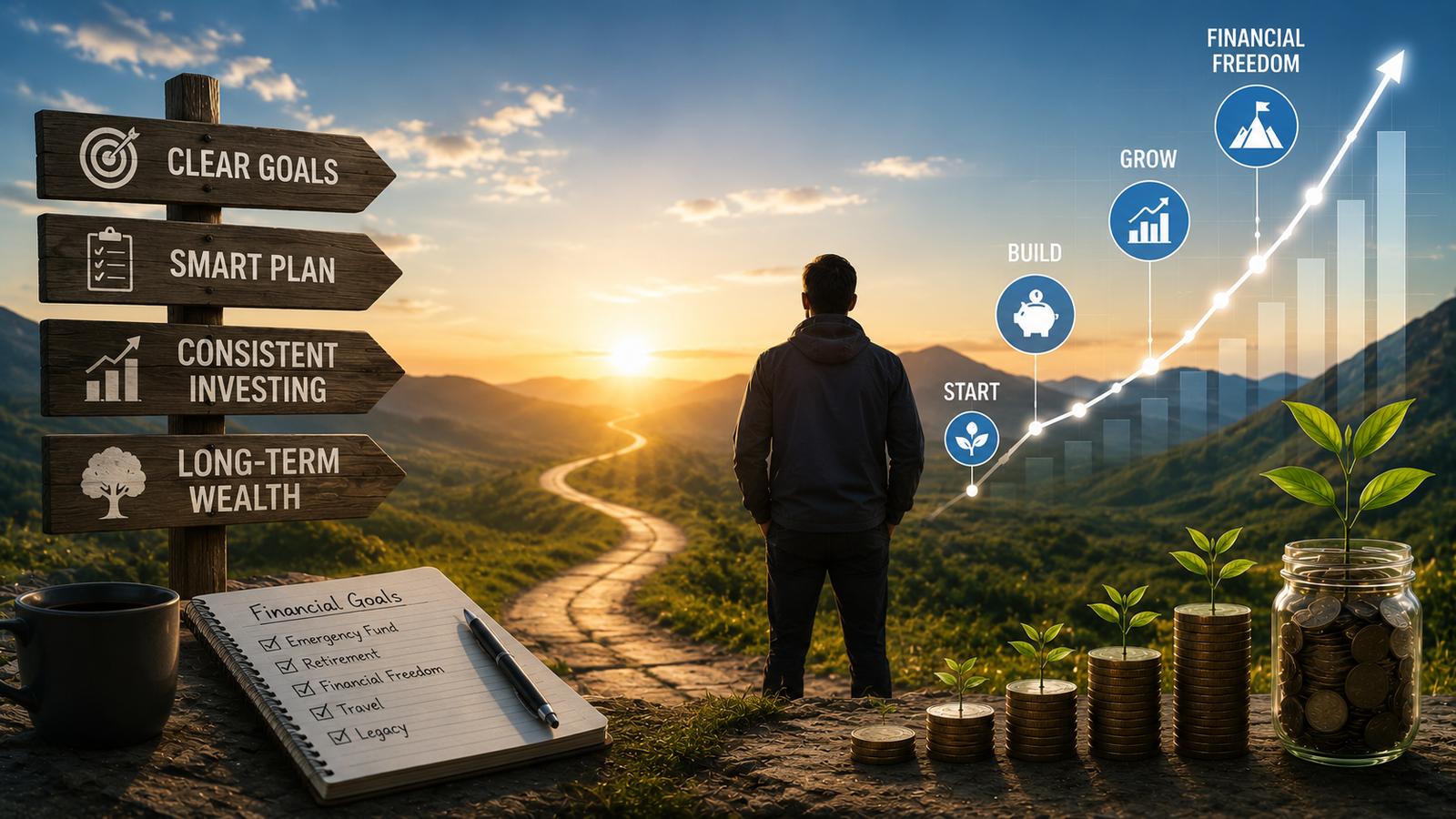
Many successful investors treat their portfolios much like a fruit tree.
They don’t dig it up every morning to check whether the roots are growing.
They water it.
Protect it.
Give it time.
And eventually enjoy the harvest.
This patient mindset separates wealth builders from market spectators.
In this article, you’ll discover why many financially successful people resist the temptation to monitor their investments every day, how constant portfolio checking can quietly reduce long-term returns, and practical strategies you can use to build a calmer, more effective investment routine.
Key Takeaways
✔ Daily portfolio checking often increases emotional investing rather than improving returns.
✔ Wealthy investors typically focus on decades—not days.
✔ Market volatility is normal and should not automatically trigger investment decisions.
✔ Behavioral finance explains why frequent monitoring encourages fear and greed.
✔ Building wealth depends more on consistency, diversification, and patience than constant market watching.
✔ A structured investment plan reduces the need to react to short-term price movements.
Why Daily Portfolio Checking Feels Productive — But Usually Isn’t
At first glance, checking your investments every day seems responsible.
After all, successful people monitor important aspects of their lives.
Business owners review financial statements.
Athletes measure performance.
Doctors monitor patients.
So why shouldn’t investors constantly watch their portfolios?
The answer lies in understanding the difference between monitoring information and acting on random noise.
Financial markets generate an enormous amount of short-term price movement that has very little connection to the long-term value of quality businesses.
Stock prices react every day to interest rate expectations, political headlines, earnings rumors, analyst opinions, economic reports, investor sentiment, and countless other factors.
Many of these events become irrelevant within weeks—or even days.
Yet each market fluctuation creates an emotional response.
When investors repeatedly expose themselves to these short-term movements, they naturally begin feeling that every price change requires action.
This psychological trap can lead to unnecessary buying and selling, increasing transaction costs, tax consequences, and the likelihood of making emotionally driven decisions.
Ironically, having access to more real-time information doesn’t always lead to better investing.
In many cases, it creates what psychologists call an illusion of control—the feeling that constant observation provides an advantage when, in reality, it simply increases anxiety.
Successful investors recognize that while markets are unpredictable in the short run, they have historically rewarded patience over long periods.
Rather than reacting to every headline, they rely on well-defined investment strategies designed to withstand temporary volatility.
This disciplined approach transforms investing from an emotional daily activity into a systematic long-term process.
The Hidden Psychological Cost of Watching Every Market Move
One of the most overlooked risks in investing isn’t market volatility.
It’s emotional volatility.
Every notification, breaking news alert, or sudden price swing activates the brain’s natural threat detection system.
Losses tend to feel significantly more painful than equivalent gains feel rewarding—a phenomenon widely recognized in behavioral finance as loss aversion.
This psychological bias explains why a portfolio that falls by 3% may cause far more emotional discomfort than the satisfaction created by a 3% gain.
As a result, investors who constantly monitor their accounts experience more emotional highs and lows than those who check periodically.
Over time, this emotional roller coaster can erode confidence, encourage impulsive trading, and distract from the long-term goals that matter most.
Millionaires who have accumulated wealth through investing understand that financial success isn’t built by reacting to every market movement.
Instead, it’s built by following a disciplined plan through both bull and bear markets.
They recognize that temporary declines are not unusual—they are an expected part of investing.
Rather than fearing volatility, they prepare for it in advance and avoid allowing short-term emotions to dictate long-term financial decisions.
How Millionaires Think Differently About Market Volatility
One of the defining characteristics of wealthy investors is not that they avoid volatility—it is that they expect it.
For many new investors, a 5% decline in a portfolio feels like a warning sign that something is fundamentally wrong. Headlines become alarming, financial television amplifies fear, and social media fills with predictions of market crashes.
Experienced millionaires often interpret the same event very differently.
Instead of asking, “How much did I lose today?”, they ask questions like:
- Has the long-term value of the businesses I own changed?
- Has my investment thesis become invalid?
- Is this simply another normal market correction?
- Does this create new buying opportunities?
These questions reflect a shift from emotional thinking to strategic thinking.
Successful investors understand that volatility is not the enemy of wealth creation. In many cases, it is the price investors pay for earning higher long-term returns than cash or low-risk savings accounts.
History has repeatedly shown that markets experience corrections, recessions, geopolitical crises, inflation scares, banking concerns, and economic uncertainty. Yet despite these events, diversified equity markets have historically recovered over long investment horizons.
This perspective allows disciplined investors to remain calm when others panic.
Rather than viewing every decline as a crisis, they see market fluctuations as a normal feature of investing.
That mindset dramatically reduces the temptation to make impulsive decisions.
The Science Behind Long-Term Investing
Behavioral finance has transformed our understanding of why investors often underperform the very investments they own.
The challenge usually isn’t choosing good investments.
It’s remaining invested long enough for those investments to work.
Human beings evolved to react quickly to immediate threats.
Financial markets exploit this instinct almost perfectly.
Every price decline appears urgent.
Every market rally creates fear of missing out.
Every news alert suggests immediate action.
But long-term investing rewards a completely different set of behaviors:
- Patience
- Consistency
- Emotional discipline
- Delayed gratification
- Rational decision-making
These qualities are not exciting.
They rarely become viral headlines.
Yet they are responsible for much of the wealth created in financial markets.
Many investors mistakenly believe that successful investing requires constant activity.
In reality, successful investing often requires selective inactivity.
Some of the world’s wealthiest investors have repeatedly emphasized that making fewer decisions—provided those decisions are high quality—can produce better long-term outcomes than constantly adjusting a portfolio.
The ability to do nothing during periods of market uncertainty is often far more valuable than attempting to predict every short-term movement.
Why Daily Market News Can Become a Financial Distraction
Financial news serves an important purpose.
Investors should stay informed about economic trends, interest rates, company earnings, technological innovation, and global developments.
The problem arises when information becomes constant entertainment rather than useful analysis.
Modern investors receive an endless stream of notifications:
- Market opens.
- Market closes.
- Inflation updates.
- Earnings surprises.
- Analyst upgrades.
- Downgrades.
- Breaking geopolitical news.
- Social media opinions.
- Economic forecasts.
Very little of this information changes the long-term outlook of a diversified investment portfolio.
Yet every notification encourages investors to believe immediate action is necessary.
This creates what psychologists call recency bias.
People naturally assign greater importance to the newest information, even when older data provides a more accurate picture.
For example, a single disappointing earnings report may dominate financial headlines for several days.
However, if the company continues growing over the next ten years, that temporary disappointment becomes almost irrelevant.
Millionaires recognize this distinction.
They consume financial information intentionally rather than continuously.
Instead of reacting to every headline, they focus on developments that genuinely affect long-term investment fundamentals.
The Opportunity Cost of Constant Portfolio Watching
Every minute spent obsessing over short-term price movements is a minute not spent improving the factors that actually build wealth.
Many successful investors understand that increasing income often creates a much larger financial impact than attempting to optimize every market fluctuation.
Consider where your time might produce higher returns:
- Developing new professional skills.
- Negotiating a salary increase.
- Building a business.
- Creating additional income streams.
- Learning tax-efficient investing.
- Increasing annual savings.
- Improving financial literacy.
- Strengthening asset allocation.
These activities have the potential to influence your financial future far more than repeatedly checking whether a stock moved up or down by 1%.
This principle becomes even more powerful when viewed over decades.
A person who increases annual savings by $5,000 every year may ultimately accumulate significantly more wealth than someone who spends hundreds of hours attempting to predict short-term market movements.
Millionaires tend to optimize the variables they can control.
Daily stock prices are not one of them.
Savings rates, spending habits, investment discipline, career growth, and consistent contributions are.
Wealth Is Usually Built Between Decisions
Many people assume wealthy investors constantly make brilliant financial decisions.
In reality, much of investing success occurs between decisions.
Once an intelligent investment plan has been established, the greatest challenge often becomes resisting the urge to interfere with it.
Imagine planting an orchard.
The value is not created on planting day.
Nor is it created by checking the trees every morning.
The value emerges gradually through years of growth.
Investing works similarly.
The most important decisions usually occur infrequently:
- Choosing an appropriate asset allocation.
- Maintaining diversification.
- Rebalancing periodically.
- Continuing regular investments.
- Remaining invested during downturns.
Everything else is largely noise.
This is one reason many wealthy investors establish automatic investment systems.
Automation reduces emotional interference.
Money is invested according to a predetermined plan instead of temporary feelings.
By removing emotion from the process, they increase the probability of remaining consistent through both good markets and bad.
Why Time in the Market Usually Beats Timing the Market
Perhaps no investing principle has been repeated more often—and misunderstood more frequently—than this:
Time in the market is generally more important than timing the market.
Trying to predict exactly when stocks will rise or fall is extraordinarily difficult.
Even professional fund managers with access to sophisticated research frequently struggle to outperform broad market indexes consistently over long periods.
Missing only a handful of the market’s strongest recovery days can dramatically reduce long-term returns.
Unfortunately, those strong recovery days often occur immediately after periods of intense market fear—the exact moments when emotional investors are most likely to sell.
Millionaires understand they do not need perfect timing.
They simply need enough time.
Compounding rewards investors who remain patient.
Every additional year invested allows previous gains to generate new gains, creating an accelerating cycle of wealth accumulation.
This process rarely feels exciting on a daily basis.
But over twenty or thirty years, it can become one of the most powerful financial forces available to ordinary investors.
What Millionaires Track Instead of Daily Stock Prices
If successful investors aren’t watching their portfolios every hour, what are they paying attention to?
The answer may surprise you.
Most self-made millionaires focus on variables they can actually control instead of those they cannot.
Markets fluctuate constantly, but the following factors have a far greater impact on long-term wealth creation.
1. Savings Rate
One of the strongest predictors of future wealth isn’t investment performance—it’s how consistently you save.
An investor contributing $2,000 every month for twenty years often outperforms someone who occasionally achieves exceptional returns but saves very little.
Millionaires understand that capital must first be accumulated before it can compound.
Rather than obsessing over daily gains and losses, they regularly ask:
- Am I saving enough?
- Can I increase my investment contributions this year?
- Are my expenses aligned with my financial goals?
This mindset shifts attention from market noise to behaviors that consistently improve financial outcomes.
2. Cash Flow
Financial independence depends more on recurring cash flow than temporary increases in portfolio value.
Many wealthy individuals prioritize building multiple income streams, including:
- Salaries
- Businesses
- Rental properties
- Dividend-paying stocks
- Bond interest
- Royalties
- Digital products
Instead of celebrating a portfolio that gained 3% in a week, they focus on whether their investments generate sustainable income year after year.
Cash flow provides flexibility, resilience, and the ability to continue investing during market downturns.
3. Asset Allocation
Millionaires know that diversification is one of the few “free lunches” in investing.
Rather than constantly replacing investments, they periodically evaluate whether their portfolio remains aligned with their long-term objectives.
Questions they ask include:
- Am I taking more risk than necessary?
- Is my portfolio diversified across sectors and asset classes?
- Has one investment become disproportionately large?
- Do I need to rebalance?
These reviews usually occur quarterly or annually—not every morning.
4. Progress Toward Financial Goals
Wealthy investors measure progress against personal milestones rather than daily market movements.
Examples include:
- Retirement savings targets
- Emergency fund size
- Net worth growth
- Passive income goals
- Debt reduction
- Investment contribution targets
This long-term perspective keeps attention focused on meaningful progress instead of short-term volatility.
The Millionaire Mindset vs. The Average Investor Mindset
The difference between successful investors and average investors is often psychological rather than intellectual.
| Average Investor | Millionaire Investor |
|---|---|
| Checks portfolio several times a day | Reviews portfolio on a scheduled basis |
| Reacts to headlines | Follows a written investment plan |
| Focuses on daily returns | Focuses on decades of growth |
| Tries to predict the market | Accepts uncertainty |
| Frequently changes strategy | Remains consistent |
| Chases hot investments | Invests according to long-term objectives |
| Fears market corrections | Expects corrections as normal |
| Measures success daily | Measures success over years |
Notice that none of these differences require extraordinary intelligence.
They require discipline.
This is encouraging because discipline is a skill that can be developed.
Why Emotional Investing Becomes So Expensive
Every unnecessary trade carries hidden costs.
Some are obvious:
- Transaction fees
- Taxes
- Bid-ask spreads
Others are invisible.
For example:
Selling during a correction may cause an investor to miss the market recovery.
Buying after prices have already surged may reduce future returns.
Repeatedly changing investment strategies prevents compounding from working efficiently.
Perhaps the greatest hidden cost is opportunity cost.
Money removed from productive investments loses valuable time for compound growth.
Small emotional decisions repeated over decades can result in substantial differences in final wealth.
How Successful Investors Handle Market Crashes
Every millionaire investor eventually experiences significant market declines.
The difference lies in preparation.
Instead of asking:
“What should I do now?”
They have already answered that question before the crisis begins.
Many maintain written investment policies outlining:
- Target asset allocation
- Rebalancing rules
- Emergency cash reserves
- Maximum acceptable risk
- Investment time horizon
When markets become volatile, these predefined rules reduce emotional decision-making.
Planning replaces panic.
Preparation replaces prediction.
Five Practical Ways to Stop Checking Your Portfolio Every Day
Breaking the habit isn’t always easy.
Modern brokerage apps are intentionally designed to encourage frequent engagement.
Here are practical strategies used by disciplined investors.
Schedule Portfolio Reviews
Instead of checking daily, establish a regular schedule.
Examples include:
- Once a month
- Once every quarter
- Twice per year
A predetermined schedule reduces impulsive behavior.
Turn Off Market Notifications
Price alerts rarely improve investment performance.
They often increase anxiety.
Consider disabling:
- Daily gain/loss notifications
- Market news alerts
- Intraday price movements
You’ll still receive important information without constant interruptions.
Automate Your Investments
Automatic investing reduces emotional decision-making.
By investing on a consistent schedule, you remove the temptation to wait for the “perfect” moment.
Consistency generally matters more than perfect timing.
Track Net Worth Instead of Daily Returns
Net worth reflects overall financial progress.
It includes:
- Investments
- Savings
- Property
- Business ownership
- Debt reduction
Watching long-term net worth growth provides a healthier perspective than monitoring hourly stock prices.
Spend More Time Increasing Income
Many millionaires believe that increasing earning power provides higher long-term returns than trying to optimize every market fluctuation.
Learning new skills, starting a business, negotiating higher compensation, or creating passive income streams often produces greater financial impact than constantly adjusting investments.
Case Study: Two Investors, Twenty Years
Imagine two investors begin with identical portfolios worth $100,000.
Both invest in the same diversified index fund.
Both earn identical market returns.
The only difference is behavior.
Investor A
- Checks portfolio five times every day.
- Frequently reacts to market news.
- Sells during downturns.
- Buys after rallies.
- Changes strategy repeatedly.
Investor B
- Reviews portfolio every quarter.
- Continues monthly investments.
- Rebalances annually.
- Ignores short-term market noise.
- Remains invested throughout market cycles.
After twenty years, Investor B is likely to accumulate significantly more wealth—not because of superior investments, but because of superior behavior.
This illustrates one of the most powerful lessons in investing:
Investor behavior often matters more than investment selection.
Building a Portfolio You Don’t Need to Watch Constantly
One hallmark of financial maturity is constructing a portfolio designed to function without constant supervision.
Such a portfolio typically includes:
- Broad diversification
- Appropriate risk exposure
- High-quality investments
- Regular rebalancing
- Long investment horizons
- Automatic contributions
Instead of requiring daily decisions, it operates according to a disciplined framework.
This frees investors to focus on careers, businesses, family, health, and personal development—all of which contribute to long-term wealth in ways that daily market watching never will.
The goal isn’t to ignore your finances.
The goal is to build a financial system so robust that it doesn’t depend on constant attention.
True investing success comes not from watching your money every day, but from creating a strategy that allows it to work quietly in the background while you build the rest of your life.
Part 3
Expert Insights
One of the biggest misconceptions in investing is that successful investors constantly monitor the market.
In reality, many legendary investors have emphasized patience over prediction.
Long-term wealth is rarely created through constant trading. Instead, it is built by owning quality assets, maintaining discipline, and allowing compound growth to work over many years.
The greatest competitive advantage available to most individual investors is not access to better information—it is emotional discipline.
When markets become volatile, disciplined investors rely on a predefined strategy instead of reacting to fear or excitement.
In many cases, doing less leads to better long-term results.
Common Mistakes Investors Make
Avoiding these common mistakes can significantly improve your long-term investment experience.
1. Treating Investing Like Entertainment
Financial markets are exciting.
That doesn’t mean your portfolio should provide daily excitement.
Successful investing is often intentionally boring.
2. Believing Every Market Move Requires Action
Not every decline is a warning.
Not every rally is an opportunity to buy more.
Most daily price movements have little impact on long-term wealth creation.
3. Comparing Your Portfolio to Others
Social media encourages constant comparison.
Someone will always appear to have found a better investment.
Millionaires understand that personal financial goals matter far more than outperforming strangers online.
4. Confusing Activity With Progress
Making more trades does not necessarily produce better returns.
Many investors mistake frequent decision-making for intelligent investing.
Patience is often the more profitable strategy.
5. Ignoring Your Original Investment Plan
An investment strategy should not change simply because markets become emotional.
Plans should evolve only when your personal goals, financial situation, or investment horizon changes.
Practical Action Plan
If you currently check your portfolio several times a day, try implementing this simple plan.
Week 1
Reduce portfolio checks to once each day.
Turn off unnecessary market notifications.
Week 2
Limit portfolio reviews to twice per week.
Spend the extra time reading about investing principles instead of market predictions.
Week 3
Move to one scheduled portfolio review each week.
Create a written investment policy that defines:
- Your long-term objectives
- Target asset allocation
- Rebalancing schedule
- Risk tolerance
- Investment time horizon
Week 4
Review your investments only once during the month.
Instead, focus your energy on:
- Increasing income
- Saving more money
- Paying down high-interest debt
- Improving professional skills
- Learning about taxes and financial planning
By the end of the month, you’ll likely feel less anxious while becoming a more disciplined investor.
Frequently Asked Questions
Should I never check my investment portfolio?
No.
Regular reviews remain important.
The key is reviewing your portfolio intentionally rather than compulsively.
For many long-term investors, monthly or quarterly reviews are sufficient.
What if the market crashes?
Market declines are a normal part of investing.
Rather than making emotional decisions, review whether your long-term investment thesis has changed.
Temporary price declines do not necessarily indicate permanent losses.
How often do professional investors review portfolios?
Institutional portfolio managers monitor markets daily because managing client assets is their profession.
Individual long-term investors typically benefit from less frequent reviews combined with disciplined rebalancing.
Isn’t staying informed important?
Absolutely.
However, there is an important difference between staying informed and reacting emotionally to every headline.
Focus on information that genuinely affects long-term fundamentals.
Does checking my portfolio too often reduce returns?
Frequent monitoring doesn’t directly reduce returns.
However, it often increases emotional decision-making, which can lead to unnecessary trading and poorer long-term outcomes.
Final Thoughts
The wealthiest investors in the world understand something that many beginners overlook.
Markets are designed to fluctuate.
Your emotions are designed to react.
Long-term wealth is created when your investment strategy is stronger than your emotional impulses.
Checking your portfolio every hour will not make your investments grow faster.
Owning quality assets.
Investing consistently.
Remaining diversified.
Ignoring short-term noise.
Allowing compounding to work over decades.
These habits have built far more millionaires than constant market watching ever will.
Remember, investing is not a competition to make the smartest decision every day.
It is a lifelong process of making enough good decisions—and avoiding enough bad ones—to allow time to do most of the work.
The less often you feel compelled to react to the market, the more likely you are to benefit from one of investing’s greatest advantages: patience.
Internal Linking Opportunities
Consider linking this article to related content such as:
- How Compound Interest Builds Wealth Over Time
- Dividend Stocks vs. Index Funds: Which Builds More Wealth?
- Financial Independence Score Calculator
- Wealth Acceleration Calculator
- Passive Income Score Calculator
- Why Consistency Beats Timing the Market
- The Psychology of Successful Investors
- How to Build a Dividend Portfolio That Pays You Every Month
External Authority Sources
For readers who want to explore these topics in greater depth, these respected resources provide high-quality educational content:
- Investopedia – Behavioral Finance Guide
- The Motley Fool – Investing Education Center
- U.S. Securities and Exchange Commission (SEC) – Investor Education
- FINRA – Investor Insights
Educational Disclaimer
This article is intended for educational and informational purposes only and should not be considered financial, legal, tax, or investment advice.
Every investor’s financial circumstances, goals, and risk tolerance are unique. Before making investment decisions, consider consulting a qualified financial professional. Past performance does not guarantee future results, and all investments involve risk, including the possible loss of principal.